
AI Support Agent for Real Estate
An AI support agent for real estate that answers from your real listings, books property viewings, and captures leads, and declines when a detail is not on file.
It is 11pm. A buyer is three coffees deep into your listings page, staring at a two-bed apartment with good light and a price that is almost right. They have questions. Is parking included? Are pets allowed? Can they see it Saturday morning? Your agents went home hours ago, so the buyer fills in a contact form, hopes someone replies by Monday, and opens a competitor's tab while they wait. By the time your team reads the form, that lead has already booked a viewing somewhere else.
Real estate runs on that exact window. The interest is highest the moment someone is looking, and it cools fast. A real estate chatbot that only greets visitors and dumps them into a form does not close that gap, it just delays it politely. This post walks through what an AI support agent for real estate actually needs to do to earn that lead: answer the property questions honestly, book the viewing while the buyer is still warm, and hand a qualified contact to your team instead of a cold form entry. We build BestChatBot as an AI Support Agent for Business Websites, so the examples are specific about what the widget does and, just as important, what it refuses to do.
The questions buyers ask, and why a generic bot fumbles them
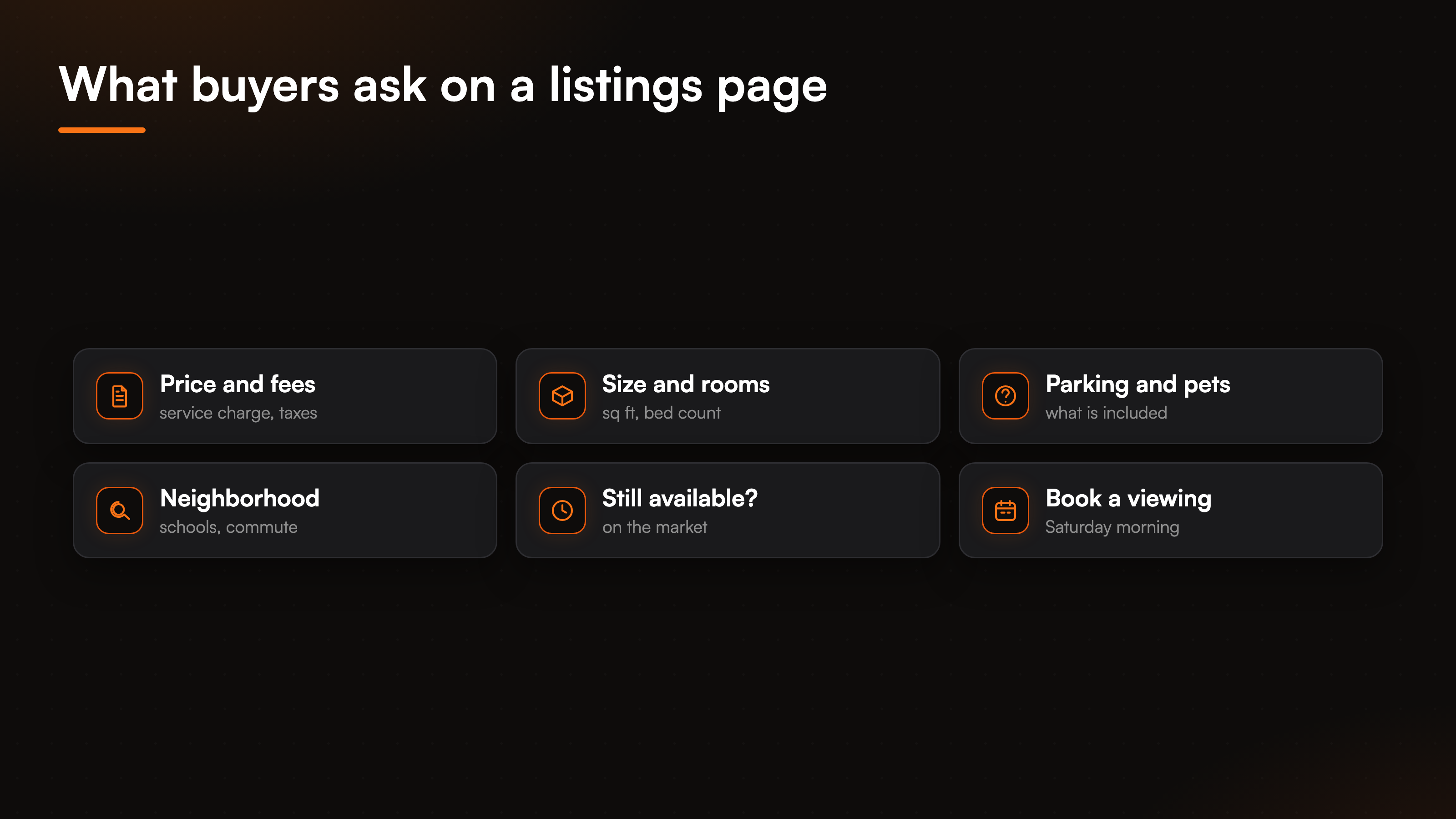
Walk through a single evening of a listings page and the questions cluster fast. Price and fees. Square footage and room count. Parking, pets, service charges, what is included. Neighborhood basics: schools nearby, the commute, when the building was renovated. Availability: is it still on the market, and when can I see it. None of that is exotic. All of it lives in your listing data, your building fact sheets, and your policy pages.
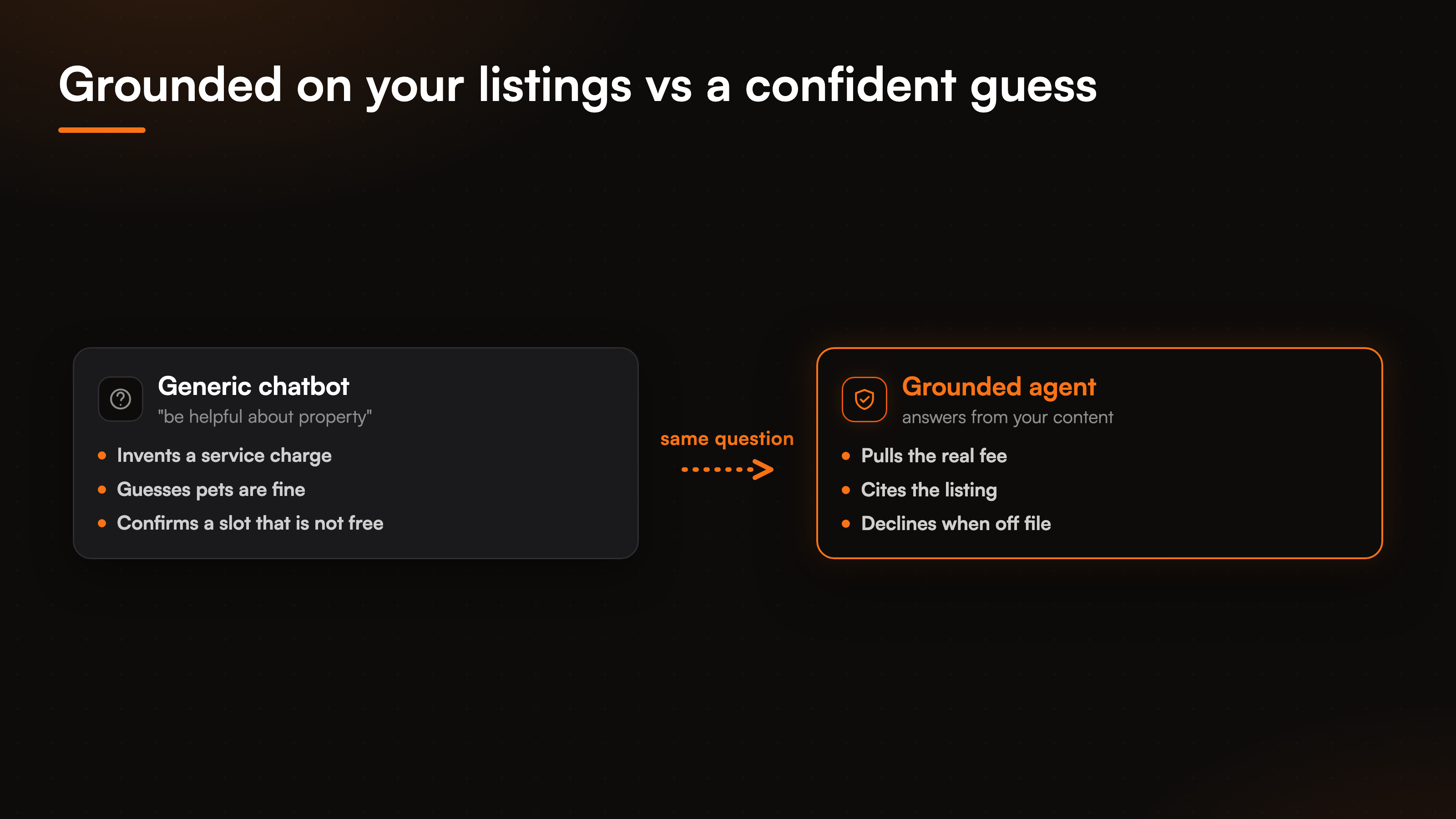
Here is where a plain chatbot gets a real estate agency in trouble. A model trained loosely on "be helpful about property" will happily invent a service charge, guess that pets are fine, or confirm a viewing slot that does not exist, because generating a confident sentence is what it does. In real estate that is not a harmless slip. A buyer who shows up expecting parking that was never there, or who was told pets were allowed when the lease says otherwise, is a complaint and a wasted showing. The honest answer to "I do not have that detail on file" beats a fluent guess every single time.
That is the whole design idea behind grounding. Grounded answers on listings mean the agent replies only from the knowledge you gave it, your listings, your fact sheets, your FAQs, and when a question falls outside that, it says so and offers to get the buyer to someone who knows. It can cite the source it pulled from, a toggle you control, so a nervous first-time buyer can see the claim came from the actual listing and not from thin air. We think bounding answers to your real content is the only safe way to run an assistant in a market where a wrong fact costs a sale. The mechanism is covered in our no-hallucination AI support agent write-up.
Book the property viewing while the buyer is still warm
Answering questions keeps a buyer talking. Booking the viewing is what turns the conversation into a step forward. This is the part most website widgets skip, and it is the part that matters most in real estate, because a scheduled Saturday tour is worth far more than a form that says "someone will contact you."
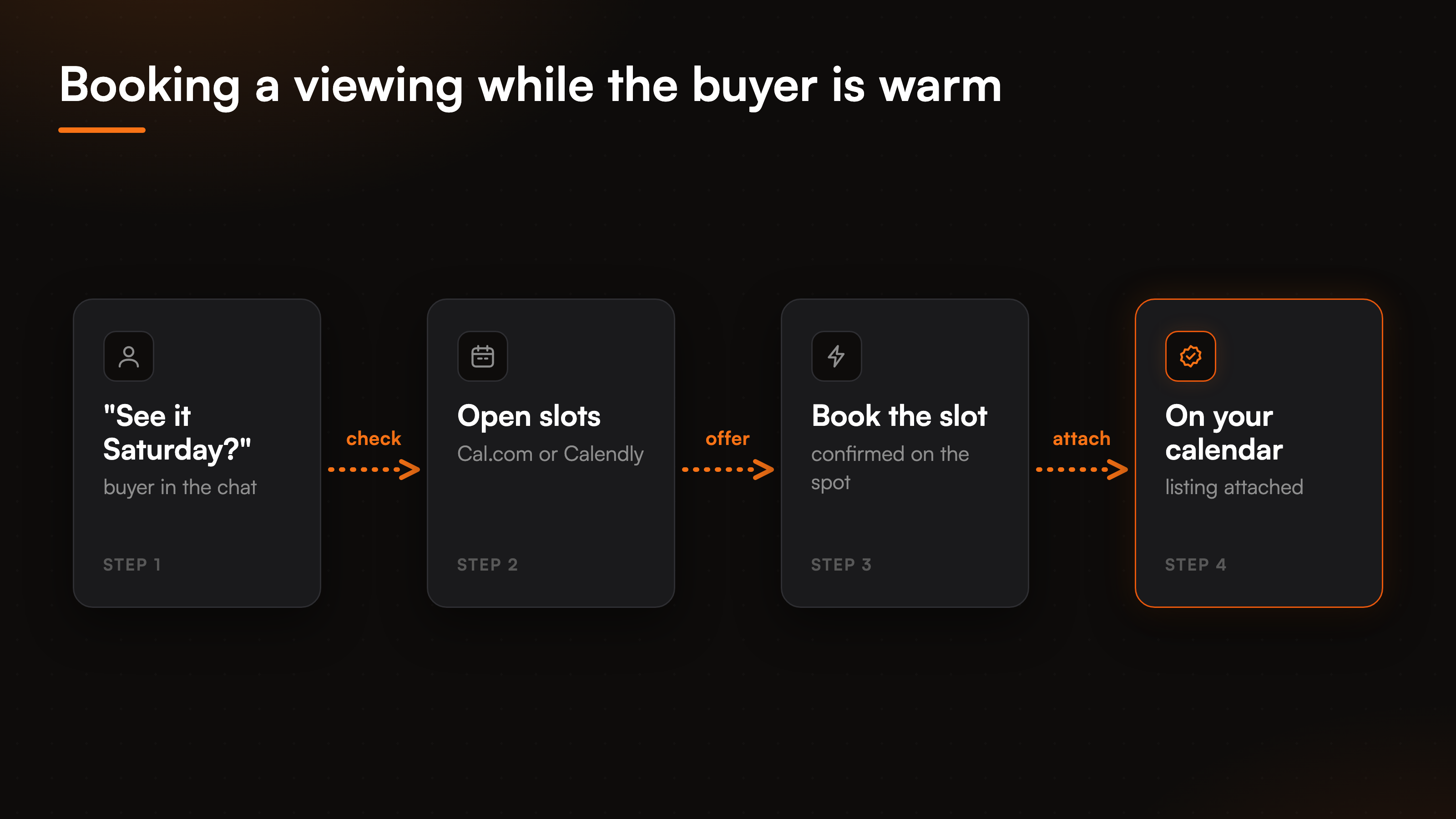
An AI support agent for real estate handles the booking as a real action, not a link drop. The buyer says "can I see it Saturday morning," the agent checks your connected calendar for open slots, offers the times that are actually free, and books the one the buyer picks. BestChatBot connects to one calendar, Cal.com or Calendly, and running that booking as a live action is a Pro or Business feature. The buyer gets a confirmed time on the spot; your agent gets a booked viewing on the calendar with the listing attached, instead of a note to chase a lead later. We break the check-book-cancel loop down in the appointment booking piece, and the same flow powers client meetings for the professional services teams next door.
One honest limit, framed as a choice. The agent does not pass the chat to a live person in real time. When a buyer needs a human, a mortgage question, a negotiation, anything past the agent's knowledge, escalation opens a tracked ticket in Zendesk or Freshdesk and routes it to your team's inbox with the full conversation attached. Nothing gets dropped, and your agents pick it up with context instead of a cold "call me back."
Turn an anonymous visitor into a lead your team can work
A booked viewing is a lead. So is a serious buyer who is not quite ready to pick a date but wants the brochure or a callback about financing. A real estate lead capture flow should read the difference and grab the contact either way, cleanly, without the interrogation form that makes people bounce.
The agent captures the lead inside the conversation. It asks for a name and an email at the natural moment, when the buyer wants the floor plan or a follow-up, and pushes that contact into your CRM as a real record. BestChatBot writes leads to HubSpot, so the person who was a name in a chat window becomes a contact your team can work the next morning, tagged with the property they were looking at. That is a different quality of lead than a form submission with no context. The lead capture actions page shows the visitor-to-contact path end to end.
A quick word on what the widget is and is not. BestChatBot is a real estate website widget that lives on your site, one surface done well. There is no separate app, no SMS blast, no channel sprawl to manage. For a real estate business whose buyers land on the listings page from a portal or a Google search, that single-channel focus is the point, the assistant is there exactly where the interest is, and nowhere you would have to staff separately.
Identity, because "cancel my viewing" should not run for a stranger
Answering a public question about a listing is safe for anyone to ask. Acting on a specific person's booking is not. If the agent can cancel or reschedule a viewing, or pull up what a returning client already booked, it has to know it is talking to the right person first.
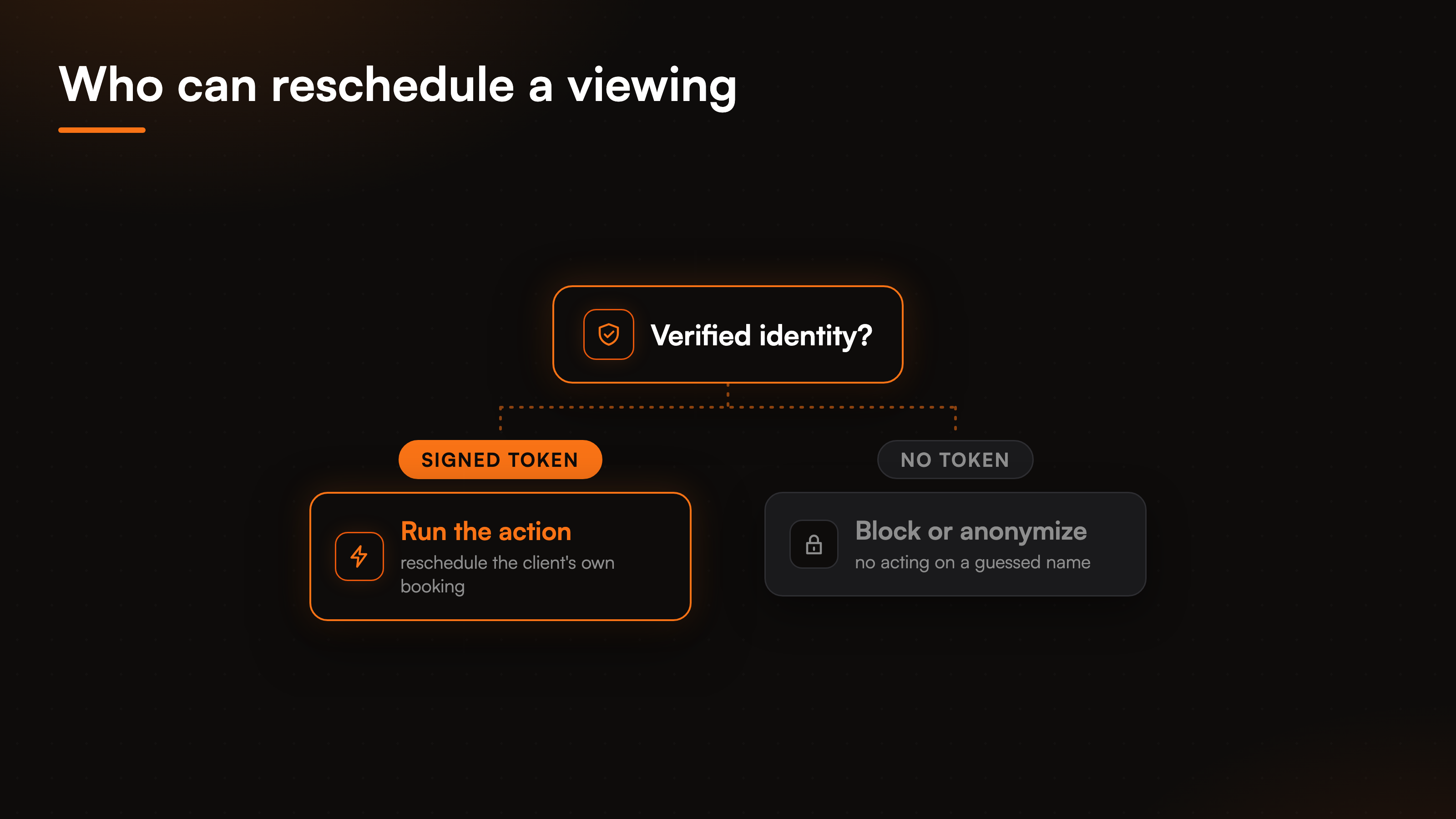
That is what identity gating does. When your site passes a signed token (a JWT) for a logged-in client, the agent pins the name and email from that verified token, not from whatever the visitor types into the chat. So "reschedule my Saturday viewing" runs against the verified client's booking, never a stranger who happened to guess a name. No verified identity means the customer-specific action is blocked or handled down an anonymous path, with no silent fallback to trusting chat input. The agent never holds your clients' credentials either; a specialized provider stores the connection secrets encrypted and refreshes tokens over OAuth or API key. For a business handling people's contact details and viewing history, that boundary is not a nice-to-have. The identity verification page walks the token flow step by step.
Where the AI support agent fits in a real estate business
Put the pieces together and the shape is clear. Public property questions get grounded answers from your real listings, at 11pm or 11am, with a source the buyer can check. A warm buyer books the viewing on the spot against your live calendar. Every serious visitor becomes a CRM contact instead of a form entry, tagged with the property. And anything the agent should not do on its own, a live human question, an action for an unverified visitor, gets routed to your team or blocked, not guessed.
None of that replaces your agents. It hands them warmer leads, booked viewings, and fewer 11pm questions to answer twice. The knowledge side is the same content you already keep: upload your listing sheets and policies as documents, point the crawler at your public site, or edit answers by hand, and the agent trains on that. Real estate is one of a handful of verticals where a website assistant earns its place fast, and you can see the others on the industries hub or compare it with a team like an agency that runs the same play. When you want to see which actions sit on which plan, the pricing guide lays out Free, Starter, Pro, and Business side by side.
FAQ
Can an AI support agent for real estate book a property viewing?
Yes, on the Pro and Business plans. The agent connects to one calendar, Cal.com or Calendly, checks the slots that are actually open, and books the time the buyer picks as a real action. The buyer gets a confirmed viewing on the spot and your team gets it on the calendar with the listing attached, rather than a note to follow up later.
What happens when a buyer asks something that is not in the listing?
The agent declines instead of guessing. It answers only from the content you gave it, your listings, fact sheets, and policies, and when a question falls outside that, it says it does not have the detail and offers to route the buyer to your team. It can also cite the source it used, so a wrong fact never gets invented to fill a gap.
How does the real estate chatbot capture leads?
Inside the conversation, at the natural moment. When a buyer wants a floor plan, a brochure, or a callback, the agent asks for a name and email and writes the contact to your CRM, HubSpot, tagged with the property they were viewing. That gives your team a lead with context instead of a bare form submission.
Does the widget work outside our website?
No, and that is deliberate. BestChatBot is a website widget, one surface done well, with no separate app or extra channels to staff. For a real estate business whose buyers arrive on the listings page from a portal or search, the assistant sits exactly where the interest is.
Can it handle a returning client's own booking safely?
Only with a verified identity. When your site passes a signed token for a logged-in client, the agent pins that person's name and email from the token and acts on their booking alone. Without a verified identity, a customer-specific action like "reschedule my viewing" is blocked or handled anonymously, never run on a guess.