
AI Support Agent for Local Services and Appointments
An AI support agent for local services that books, reschedules, and cancels appointments from your real calendar, answers from your own info, and declines when it is not sure.
The phone rings while you are mid-appointment. A hair color is processing, a filling is half done, a car is up on the lift, so nobody picks up. The caller wanted to book a slot next Tuesday. They hear four rings, hang up, and try the salon two streets over that answered on the second ring. You never even knew they called. For a local service business, that missed call is not a small thing. It is a booking that walked, and it happens every busy afternoon.
Local services live and die by the appointment book. Barbershops, dental clinics, auto shops, physiotherapists, gyms, cleaners, plumbers: the whole business is people wanting a time slot, and a slot that goes unbooked or a no-show that goes unfilled is revenue that does not come back. A website that only shows opening hours and a phone number leaves that demand on the table after 6pm and during every rush. This post is about what an AI support agent for local services has to do to actually catch it: book the appointment inside the chat, reschedule and cancel without a phone tag, and answer the routine questions honestly instead of guessing. We build BestChatBot as an AI Support Agent for Business Websites, so the examples stay specific about what the widget does and what it will not do.
Book the appointment inside the chat, not a callback
Answering questions is table stakes. An appointment booking chatbot is only worth adding if it books, and booking is the step most website chatbots quietly skip. A local business chatbot that greets a visitor and then says "call us to book" has just added a step, not removed one. The visitor still has to pick up the phone, during your hours, and hope someone is free to answer.
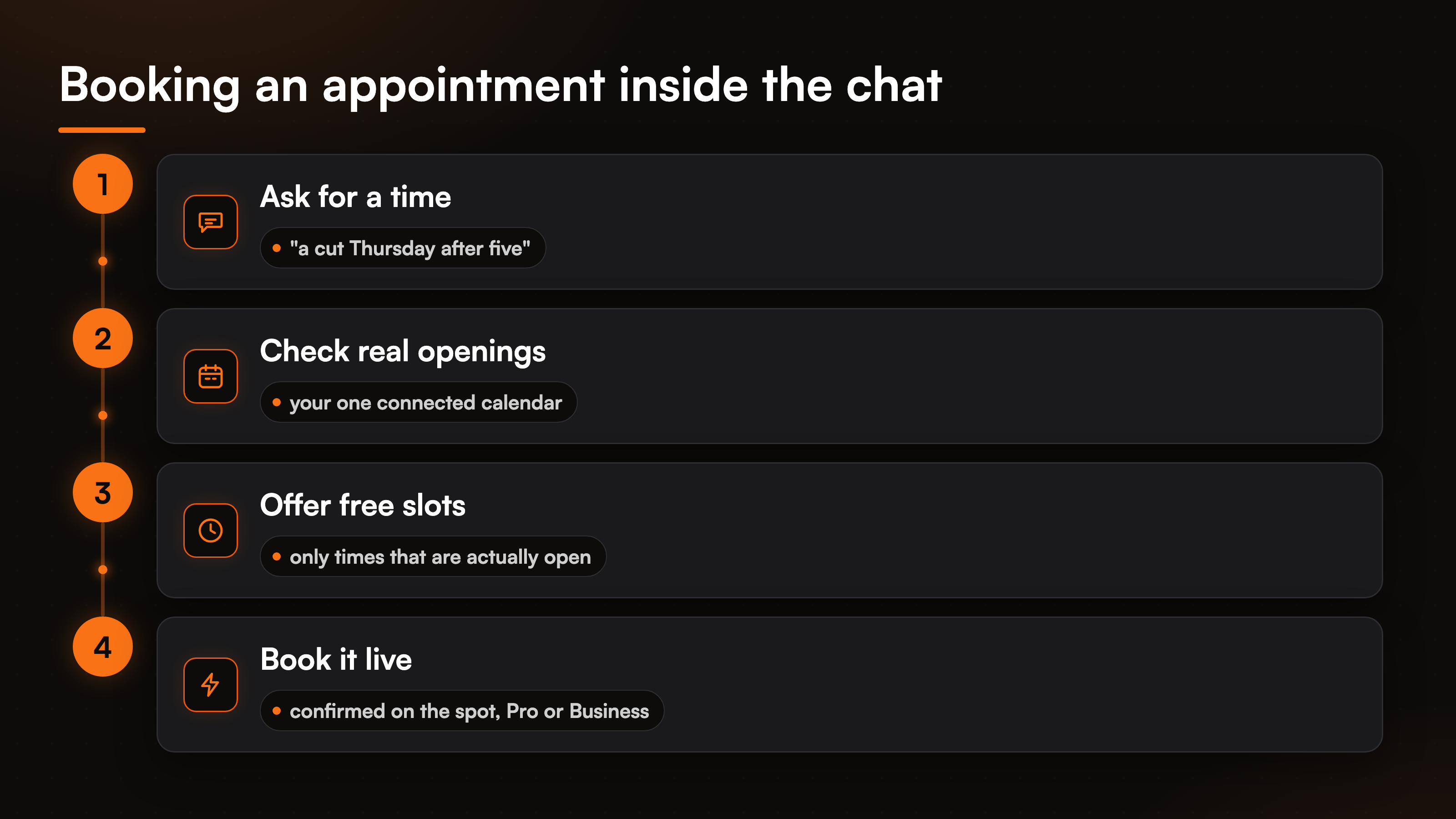
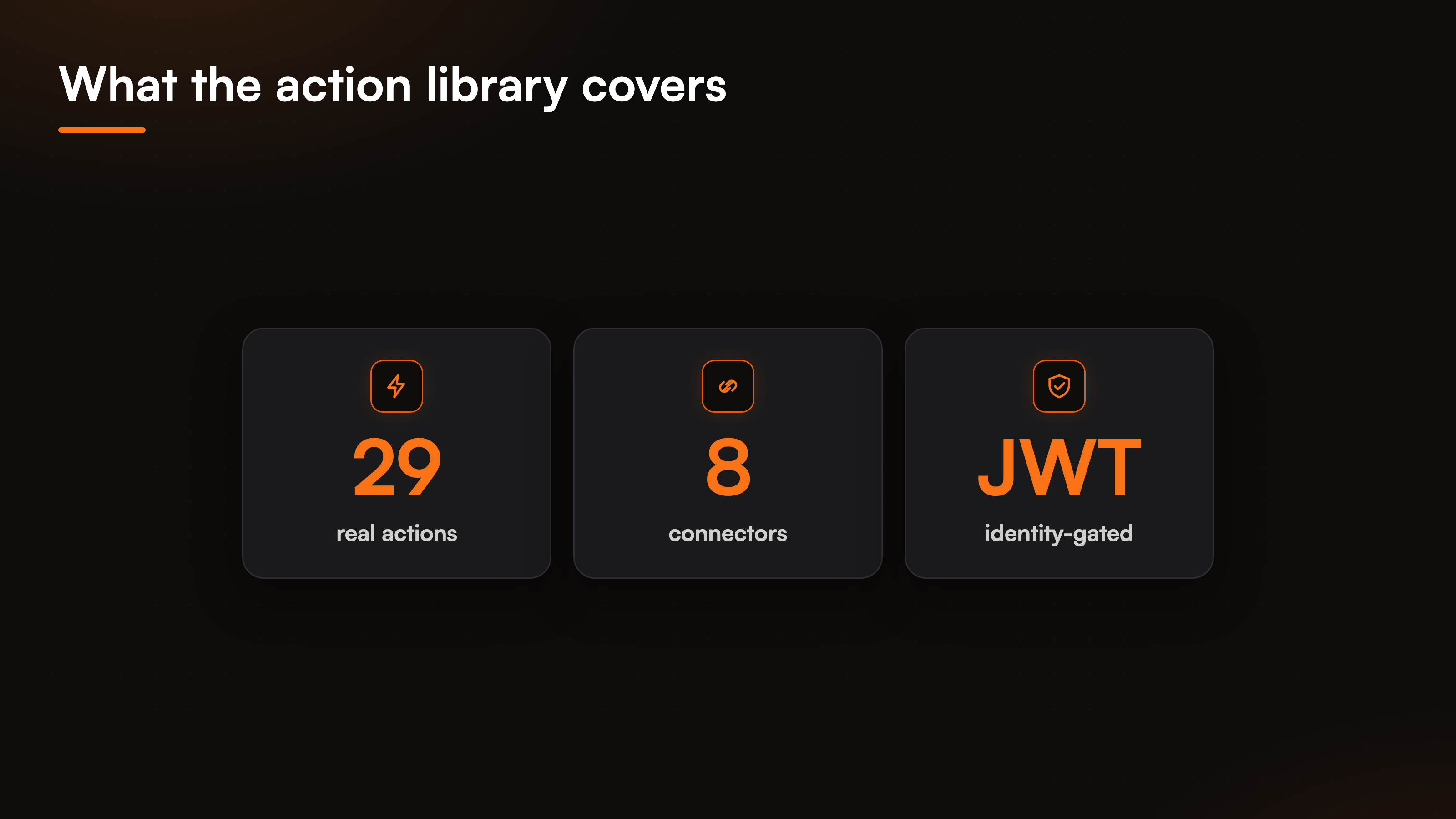
An AI support agent for local services runs the booking as a real action. The visitor says "can I get a cut Thursday after five," the agent checks your connected calendar for the slots that are genuinely open, offers the times that are free, and books the one the visitor picks. BestChatBot connects to one calendar, Cal.com or Calendly (you pick one, not both), and running that booking live is a Pro or Business feature. The visitor walks away with a confirmed time; you get the appointment on the book with the service attached, instead of a voicemail to return between clients. We walk the check-book-cancel loop end to end in the appointment booking piece, and it is the same action other appointment-heavy teams lean on, like the professional services firms next door.
One honest limit, and it is a design choice rather than a gap. The agent does not pass the chat to a live person in real time. When a caller needs a human, a complicated quote, a medical concern past what your info covers, a complaint, escalation opens a tracked ticket in Zendesk or Freshdesk and routes it to your team's inbox with the full conversation attached. Nothing gets lost, and whoever picks it up sees the whole thread instead of starting from "sorry, can you repeat that."
Reschedule and cancel without the phone tag
Booking is half the story. The other half is everything that happens after, and it is where a lot of local-service revenue quietly leaks. A client needs to move Tuesday to Thursday. A patient has to cancel. Right now that means a phone call during your hours, a missed call, a voicemail, and a slot that sits empty because you found out too late to fill it.
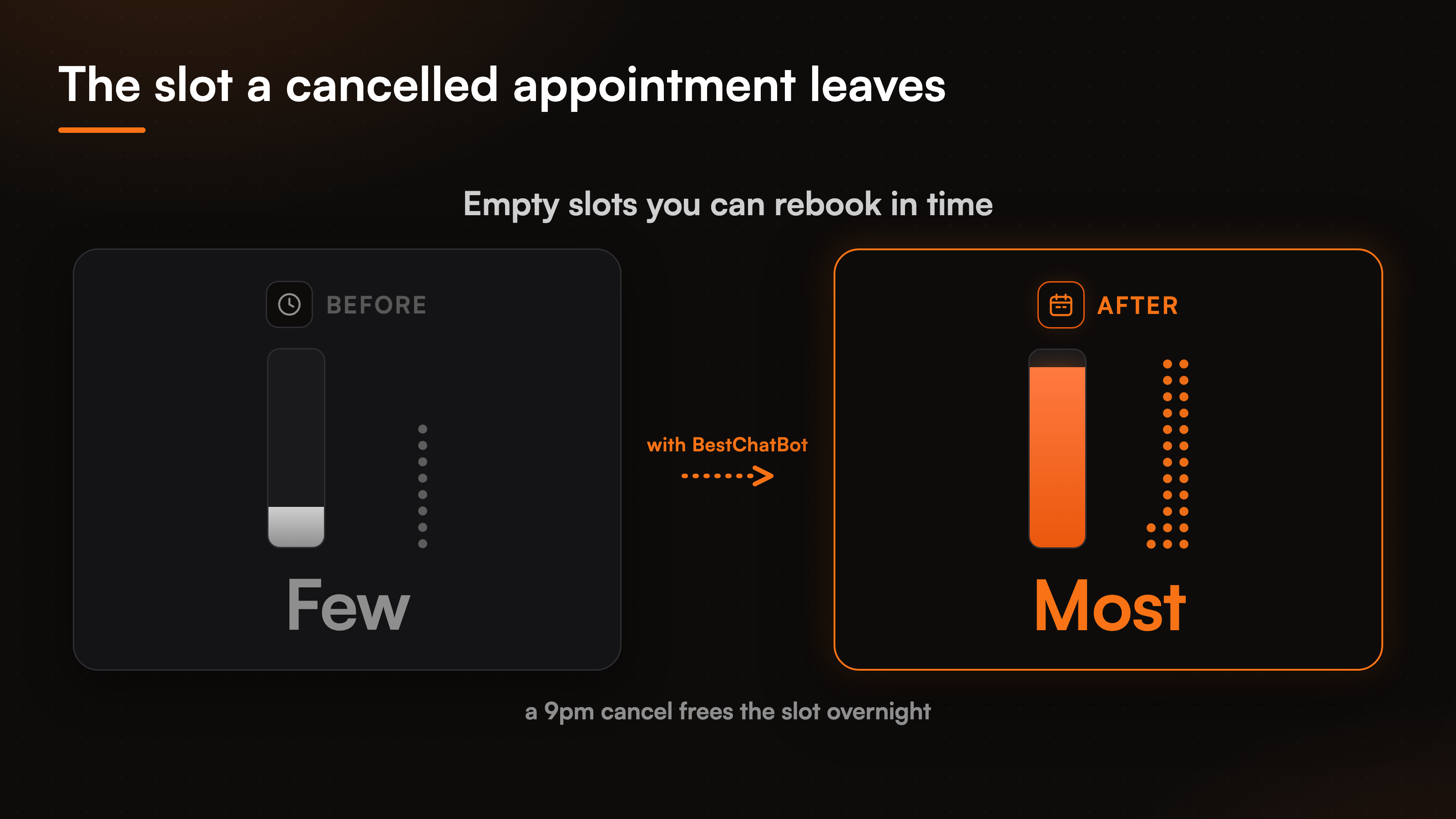
Here a reschedule appointment bot earns its place. A returning client says "move my Tuesday appointment to Thursday," and the agent reschedules it against the same calendar, freeing the old slot so someone else can grab it and putting the client in the new one. A cancellation the client makes at 9pm frees that time overnight, so the morning starts with an open slot you can rebook instead of a ghost booking. That is how you reduce no-shows: the difference between a slot you eat and a slot you recover. We think the cancel-and-reschedule path matters more than the first booking for a service business, because an empty chair you knew about in time is an empty chair you can sell.
There is a boundary on those actions, and it is the right one: touching a specific person's appointment needs a verified identity, covered further down. Answering "are you open Saturday" is safe for anyone. Cancelling Maria's 3pm is not, and the agent treats the two differently.
One widget, every service and every opening you offer
A local business is rarely one thing on one schedule. A salon has cuts, color, and treatments, each a different length. A clinic has a hygienist and two dentists with separate books. An auto shop has an MOT bay and a service bay. The questions pile up around that: how long does a color take, do you do same-day, is the Saturday slot with the senior stylist, what does a full service cost. A service business website widget has to sit on top of all of it from one chat window.
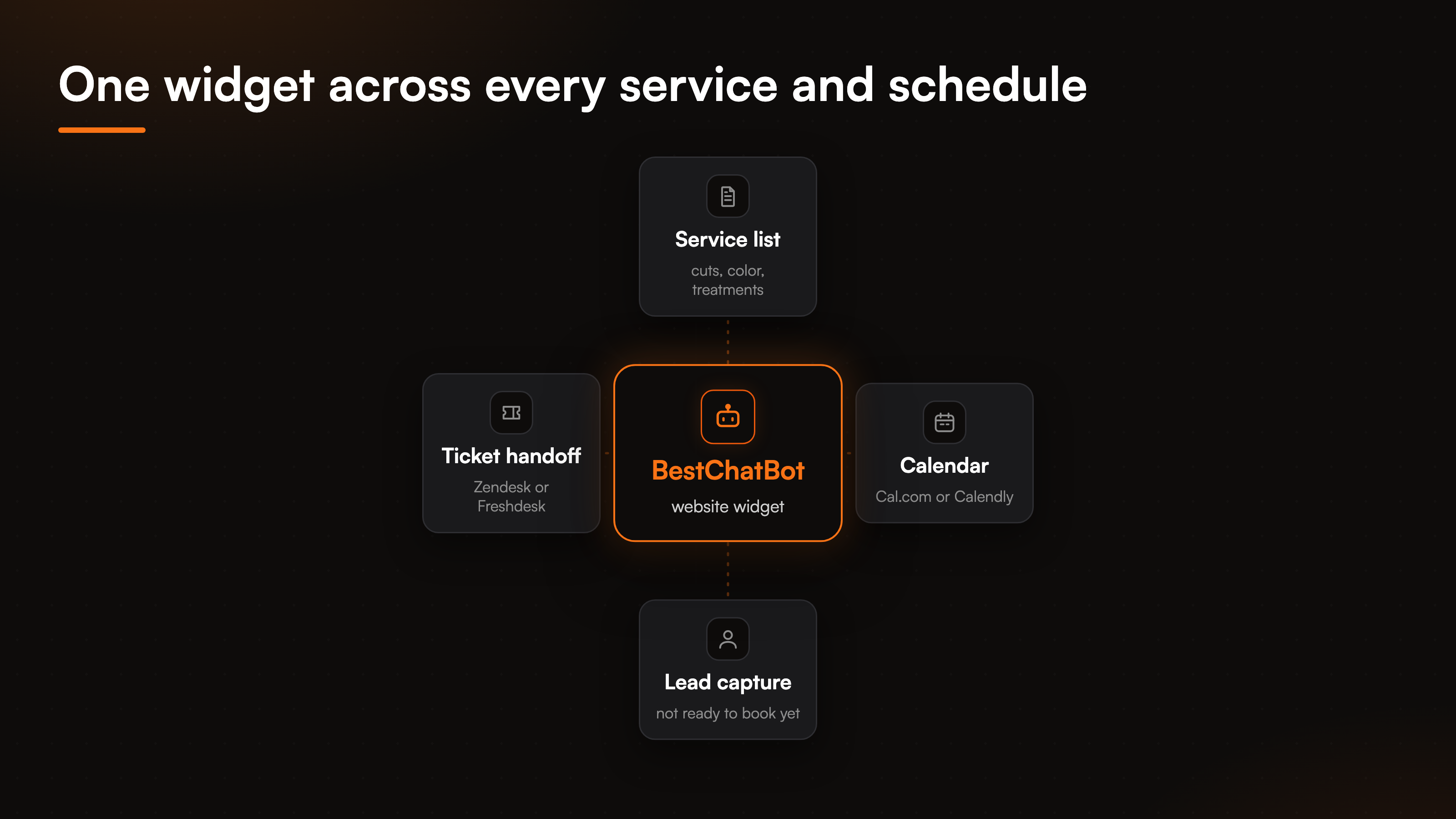
That is what the setup gives you. One assistant on your website answers from your real service list and prices, checks your one connected calendar for real availability, captures the lead when someone is not ready to book yet, and routes anything human to your inbox as a ticket. The visitor never sees the moving parts. They ask about a color, get the length and the price from your own info, see the actual Thursday-evening openings, and book one, all in the same chat window. The industries hub shows the other verticals that run this same shape, and the widget itself is one surface done well: no separate app, no SMS list to manage, no second channel to staff. For a business whose customers find you on Google and land on your site, that single-channel focus is the point, the assistant sits exactly where the interest is.
A bot that guesses vs an agent that actually books
The gap between a generic chatbot and a real agent shows up fastest in a service business, because the wrong answer here costs a booking or a bad review. A model trained loosely to "be helpful about a salon" will cheerfully confirm a Saturday slot that is already taken, invent a price for a service you do not offer, or promise same-day when your book is full, because producing a confident sentence is all it is doing. A customer who shows up for a slot that does not exist is a complaint and a wasted chair.
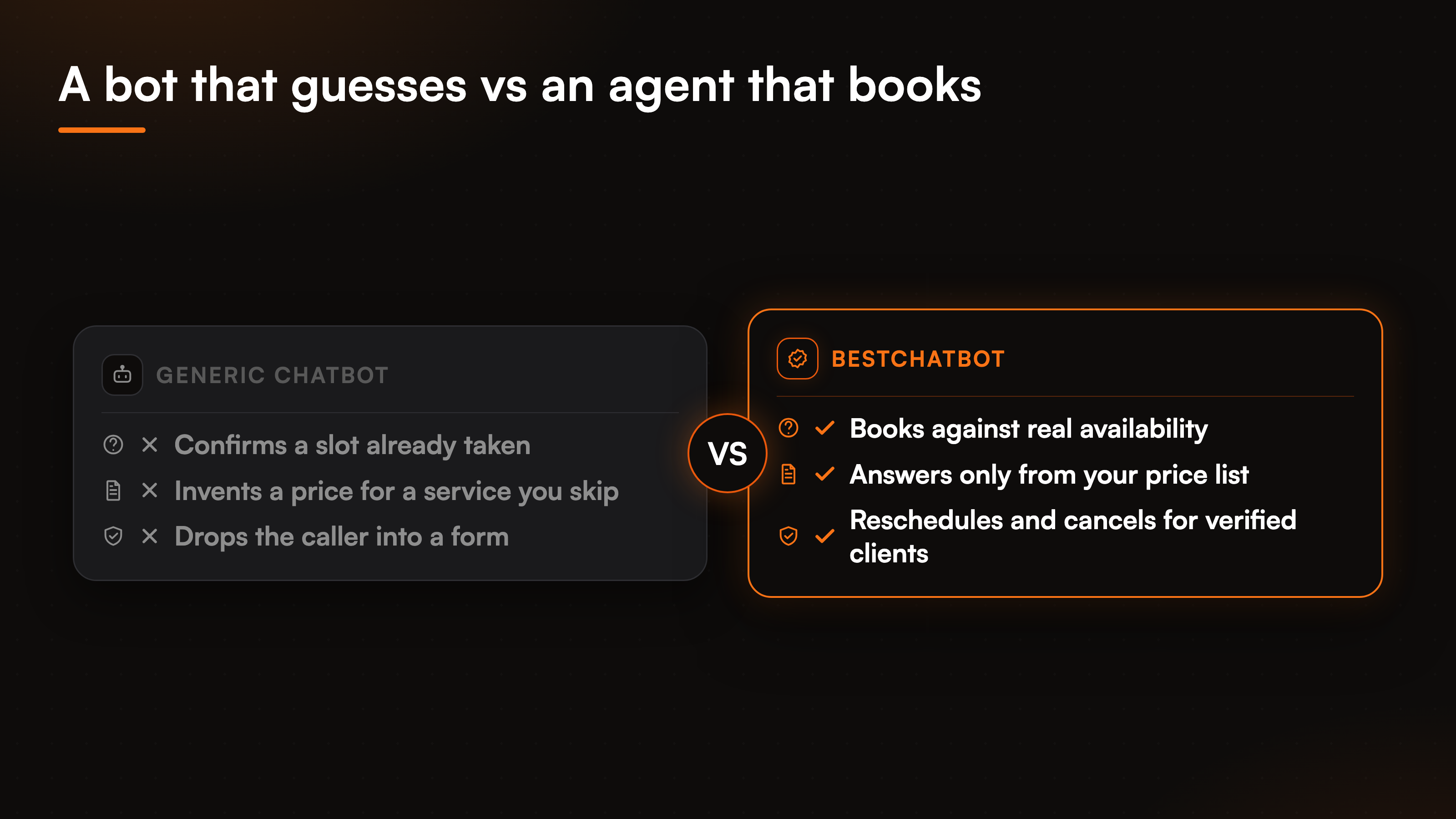
Grounding is the fix. A grounded agent answers only from the info you gave it, your service list, prices, policies, and hours, and when a question falls outside that, it says it does not have the detail and offers to get the customer to your team. It can cite the source it pulled from, a toggle you control, so a first-time client can see the price came from your actual price list. And when it acts, it acts on real data: it books against the calendar's true availability, not a guess about what is free. We hold the line that an assistant with no real knowledge and no real calendar is worse than no assistant, because a wrong confirmation is harder to undo than an unanswered question. The mechanism behind the declining is in our no-hallucination AI support agent write-up.
Identity, so "cancel my appointment" cannot run for a stranger
Public questions are open to anyone. Acting on a named person's appointment is not. If the agent can cancel or reschedule a booking, it has to be sure it is talking to the right person before it touches anything.
That is what identity gating handles. When your site passes a signed token (a JWT) for a logged-in client, the agent pins the name and email from that verified token, not from whatever the visitor types. So "reschedule my Saturday appointment" runs against the verified client's own booking, never a stranger who happened to guess a name. No verified identity means the customer-specific action is blocked or handled down an anonymous path, with no silent fallback to trusting chat input. The agent never holds your customers' credentials, either: a specialized provider stores the connection secrets encrypted and refreshes tokens over OAuth or an API key. For a business holding people's contact details and appointment history, that boundary is not optional. The token flow is spelled out on the identity-verified actions page.
Where the AI support agent fits in a local service business
Put it together and the shape is simple. Routine questions get grounded answers from your real service list and prices, after hours and during the rush, with a source the customer can check. A ready customer books an open slot on the spot against your live calendar. A returning client reschedules or cancels without a phone call, so the slot frees in time to rebook. And anything the agent should not do alone, a human question, an action for an unverified visitor, gets routed to your inbox or blocked, never guessed.
None of that replaces your front desk. It stops the after-hours bookings from walking, keeps the calendar full when someone cancels early, and takes the routine calls off the people who are trying to do the actual work. The knowledge is the content you already have: upload your service and price sheets as documents, point the crawler at your public site, or edit answers by hand, and the agent trains on that. To see which actions sit on which plan, the pricing guide lays out Free, Starter, Pro, and Business side by side, or compare this against a team that runs a similar play in professional services.
FAQ
Can an AI support agent for local services book appointments?
Yes, on the Pro and Business plans. The agent connects to one calendar, Cal.com or Calendly, checks the slots that are actually open, and books the time the customer picks as a real action. The customer gets a confirmed appointment on the spot and it lands on your book with the service attached, instead of a voicemail to return later.
Can customers reschedule or cancel through the chat?
Yes, with a verified identity. A returning client can move or cancel their own appointment in the chat, and the agent frees the old slot on your calendar so you can rebook it. Because it touches a specific person's booking, the action needs a signed token proving who they are, so a stranger cannot cancel someone else's slot.
Will the chatbot make up prices or availability?
No. The agent answers only from the info you gave it, your service list, prices, and hours, and books against your calendar's real availability. When a question falls outside your content it declines and offers to route the customer to your team, and it can cite the source it used so a wrong fact never gets invented to fill a gap.
What happens when someone needs a real person?
The agent opens a tracked ticket in Zendesk or Freshdesk and routes it to your inbox with the full conversation attached. It does not pass the chat to a live person in real time, that is a deliberate limit, but nothing gets dropped and your team picks it up with the whole thread instead of a cold callback.
Does it work only on our website?
Yes, and that is on purpose. BestChatBot is a website widget, one surface done well, with no separate app or extra channels to run. For a local service business whose customers find you on Google and land on your site, the assistant sits exactly where they are already looking for a time to book.