
Order Tracking Chatbot for Ecommerce
An order tracking chatbot answers "where is my order" with live status from your store. How it resolves WISMO at scale and cuts your highest-volume tickets.
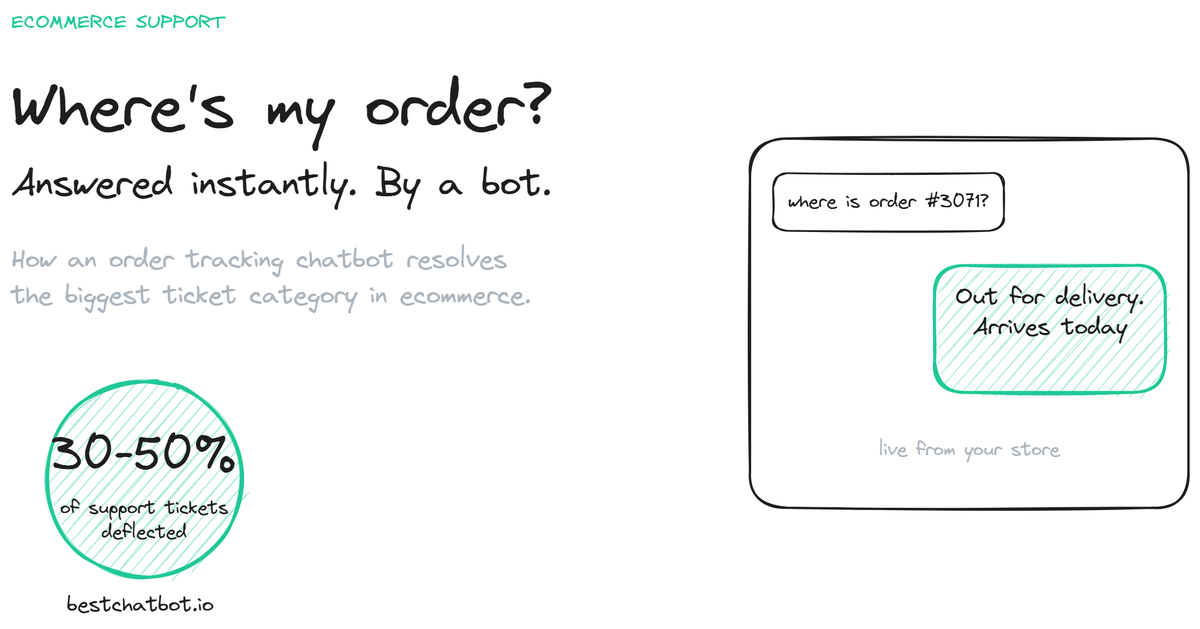
An order tracking chatbot answers the single most common question in ecommerce support: "where is my order?" The industry even has an acronym for it, WISMO, because it dominates store support inboxes. For many stores, WISMO questions are 30 to 50% of all support volume, and almost none of them need a human, because the answer is sitting in the store's own order data. An order tracking chatbot reads that data and answers instantly, which is why it is usually the first thing a store automates. This page covers how the chatbot resolves WISMO at scale, what it needs to do it accurately, and where it hands off.
Why WISMO dominates ecommerce support
The "where is my order" question is high-volume for a structural reason: every order generates a window of anxiety between purchase and delivery, and during that window customers want reassurance. The bigger the order, the longer the shipping, the more anxious the customer, the more often they check. A store doing a thousand orders a month generates a steady stream of WISMO questions, and they cluster around the days after shipping when tracking is most uncertain.
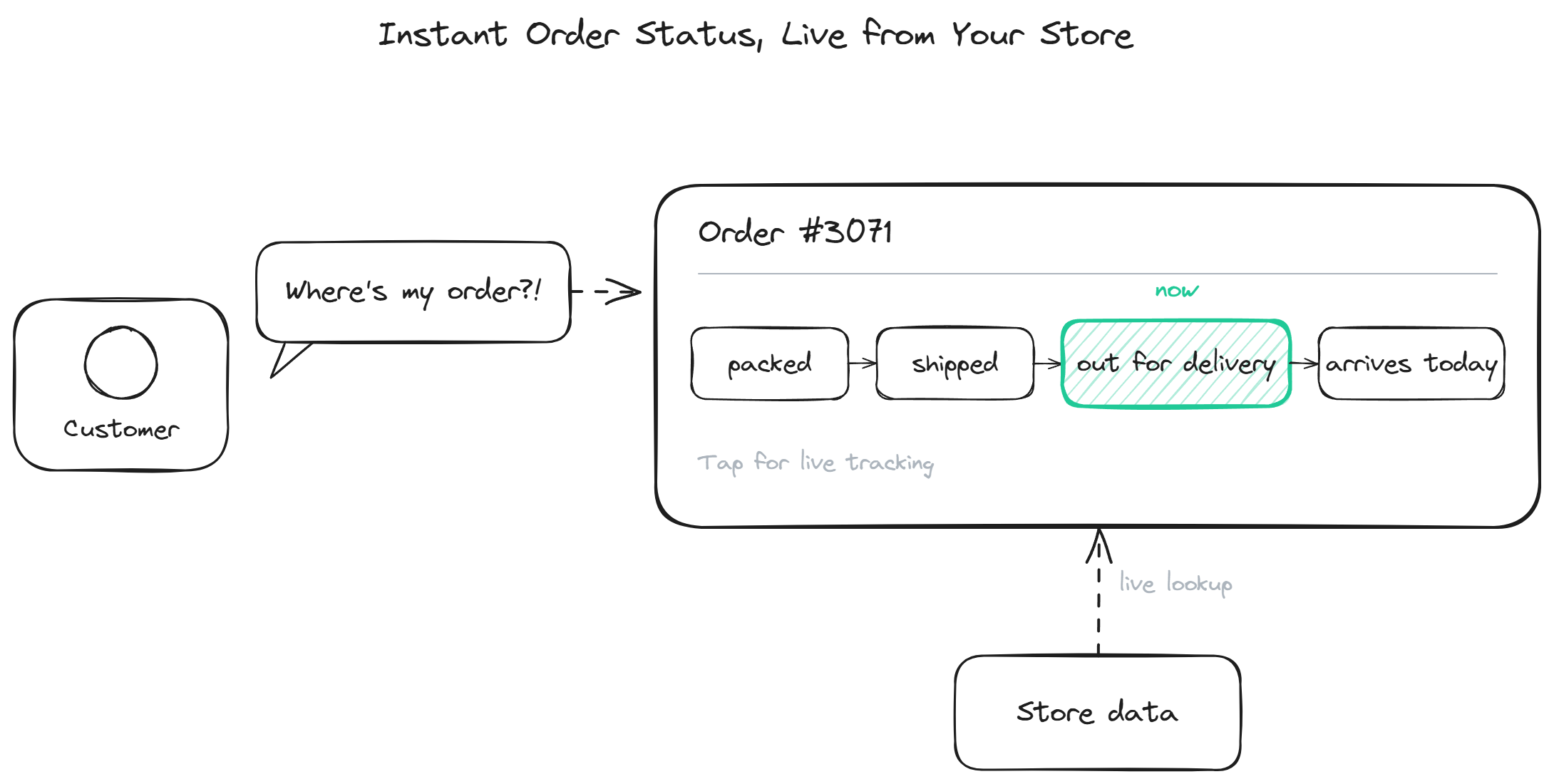
The frustrating part for support teams is that these questions are almost entirely answerable from data the store already has. The order status, the fulfillment state, the tracking number, the carrier's estimated delivery, all of it lives in the store platform. A human answering a WISMO question is just looking it up and typing it back. That is exactly the kind of repetitive lookup a chatbot does better, faster, and around the clock.
Automating WISMO is usually the highest-leverage single thing an ecommerce store can do with a support chatbot, because it removes the largest category of tickets while improving the customer experience (instant answer versus waiting for a human).
How the order tracking chatbot works
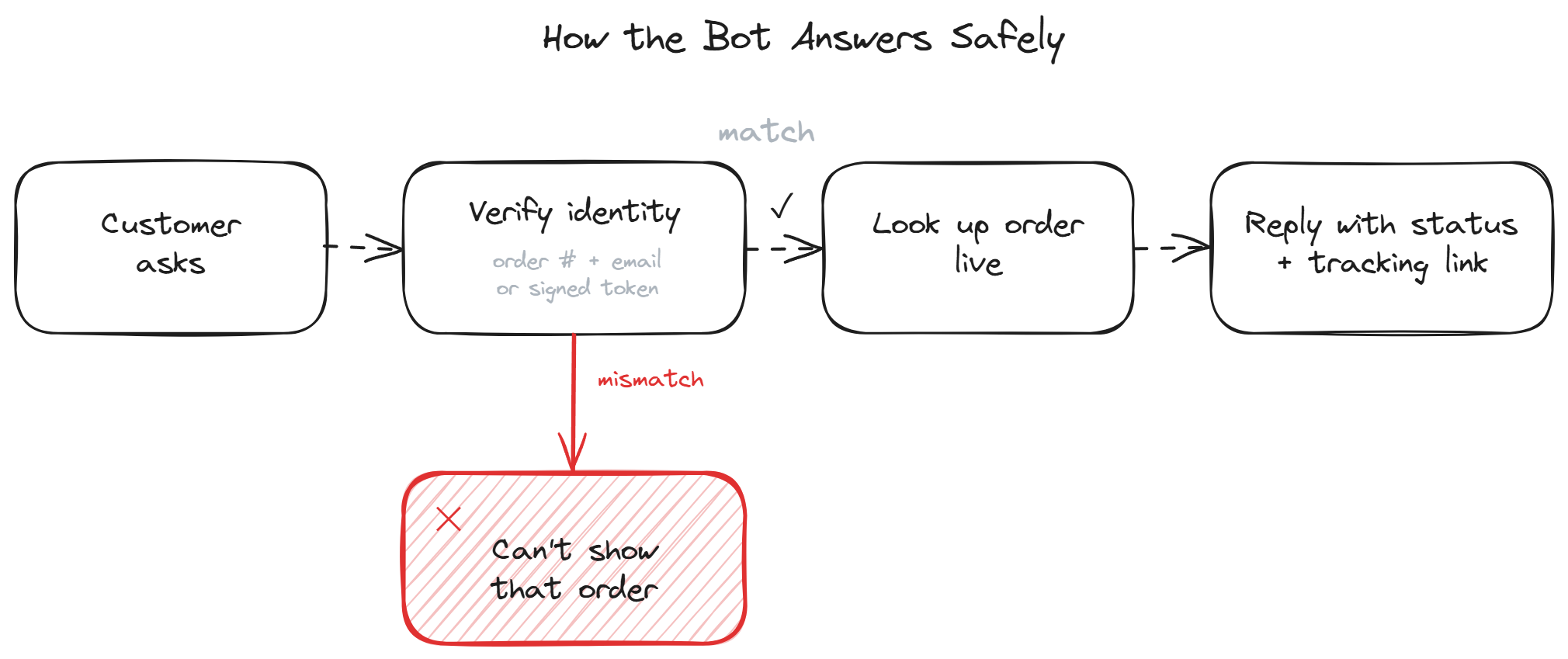
The chatbot resolves a WISMO question in a short sequence. The customer asks where their order is. The bot establishes identity, either by asking for the order number and the email on the order, or by reading a signed token if the customer is logged in. Once identity is confirmed, the bot queries the store platform live for that order, reads the fulfillment status and tracking details, and answers with the current state plus a tracking link.
Identity verification is the part that matters most and the part naive implementations get wrong. The bot must only show a customer their own order, never someone else's. Order-number-plus-email matching covers logged-out visitors; a signed token covers logged-in ones. Without verification, the bot should answer general shipping-policy questions but never return order-specific data.
The data is read live at the moment of the question, so the status is always current. This is different from a knowledge base answer, which comes from synced content. Order status comes straight from the store, which means a package that shipped an hour ago shows as shipped, not as the stale status from the last sync.
Where it hands off
Most WISMO questions resolve cleanly: the bot looks up the order, reports the status, done. The exceptions are the cases that genuinely need a human, and the chatbot should recognize them and route them.
A package marked delivered that the customer says never arrived. A tracking number that has not updated in days. An order stuck in an unusual fulfillment state. A customer who is upset rather than just curious. These need human judgment, and the bot should create a ticket in your connected help desk with the order details and conversation transcript attached, so the agent picks up with full context rather than starting cold.
This split, automate the routine lookups and escalate the exceptions, is what makes the order tracking chatbot a net positive rather than a wall customers have to get past. For the broader returns flow that often follows a delivery problem, the returns support page covers how the bot handles the next step. Stores measuring the impact of this automation usually quantify it through the ticket deflection ROI on the WISMO category specifically.
BestChatBot reads order status live from Shopify and WooCommerce, verifies identity before showing order data, and creates a ticket with full context for the exceptions it cannot resolve.
Comparing tools before you buy? See which AI agent handles ecommerce.
FAQ
- How does the chatbot know the order status? It reads live from your store platform (Shopify, WooCommerce) at the moment of the question. The status is always current, not a synced or cached copy, because it comes straight from the store's order record.
- Can a customer see someone else's order? No, with identity verification configured. The bot only returns order data after confirming the requester owns the order, through order-number-plus-email matching or a signed token for logged-in customers.
- What happens when tracking shows a problem? The bot recognizes exception cases (delivered-but-not-received, stalled tracking, unusual states) and routes them to a human, creating a ticket with the order details and transcript attached rather than trying to resolve a genuine delivery problem itself.
- Does it work for guest checkout orders? Yes. Guest orders are looked up with order-number-plus-email matching, the same verification used for any logged-out visitor. The customer provides the order number and the email used at checkout.
- How much support volume does this actually remove? WISMO is commonly 30 to 50% of ecommerce support volume, and the large majority of it is automatable because the answer is in the store data. The exact reduction depends on your shipping profile and how anxious your customers are, but order tracking is usually the single largest deflection a store gets. For pricing details, see plans.
For pricing details, see plans.
Browse the ecommerce support overview.
For WooCommerce specifically, see how WooCommerce order lookups work in the dedicated guide.
The same live store connection can also help recover abandoned carts by answering the question that stalls a checkout.
Tracking is the first question after an order ships, not the last. The wider flow is covered in automating post-purchase support.