
What Is Conversational AI
Conversational AI, defined: how software reads plain language, remembers context, and replies from your real content instead of guessing at the answer.
Type a question into the support box on a website and something has to make sense of it. Not match it to a keyword, actually read it, work out what you want, and reply in words you understand. When people talk about conversational AI, that is the ability they mean: software that holds a back-and-forth in plain language instead of pushing you through menus and canned buttons.
The term gets stretched to cover everything from a scripted pop-up to a full agent, so it is worth being precise. This piece defines conversational AI without the buzz, walks through how it turns a message into a useful reply, and shows what separates it from the basic chatbots most of us have argued with. It stays anchored to a real product the whole way, so the definition points at something you can watch work rather than a diagram on a slide.
What conversational AI actually is
Conversational AI is software that can understand language the way it is naturally written, keep track of a conversation as it unfolds, and respond in kind. Take out the marketing and it rests on two abilities a plain FAQ page does not have. It reads intent from messy, real phrasing, so "my package never showed" and "where is my delivery" land in the same place. And it remembers what came a moment ago, so a follow-up like "and the other one?" still makes sense.
The conversational AI meaning that matters, then, is less about the model and more about the loop of understanding and reply. A search box returns links and leaves you to read them. A conversational system reads your sentence, figures out what you are after, and answers the question you actually asked. That sounds small until you have tried to pull a refund policy out of a site map at eleven at night.
How a conversational agent turns a message into an answer
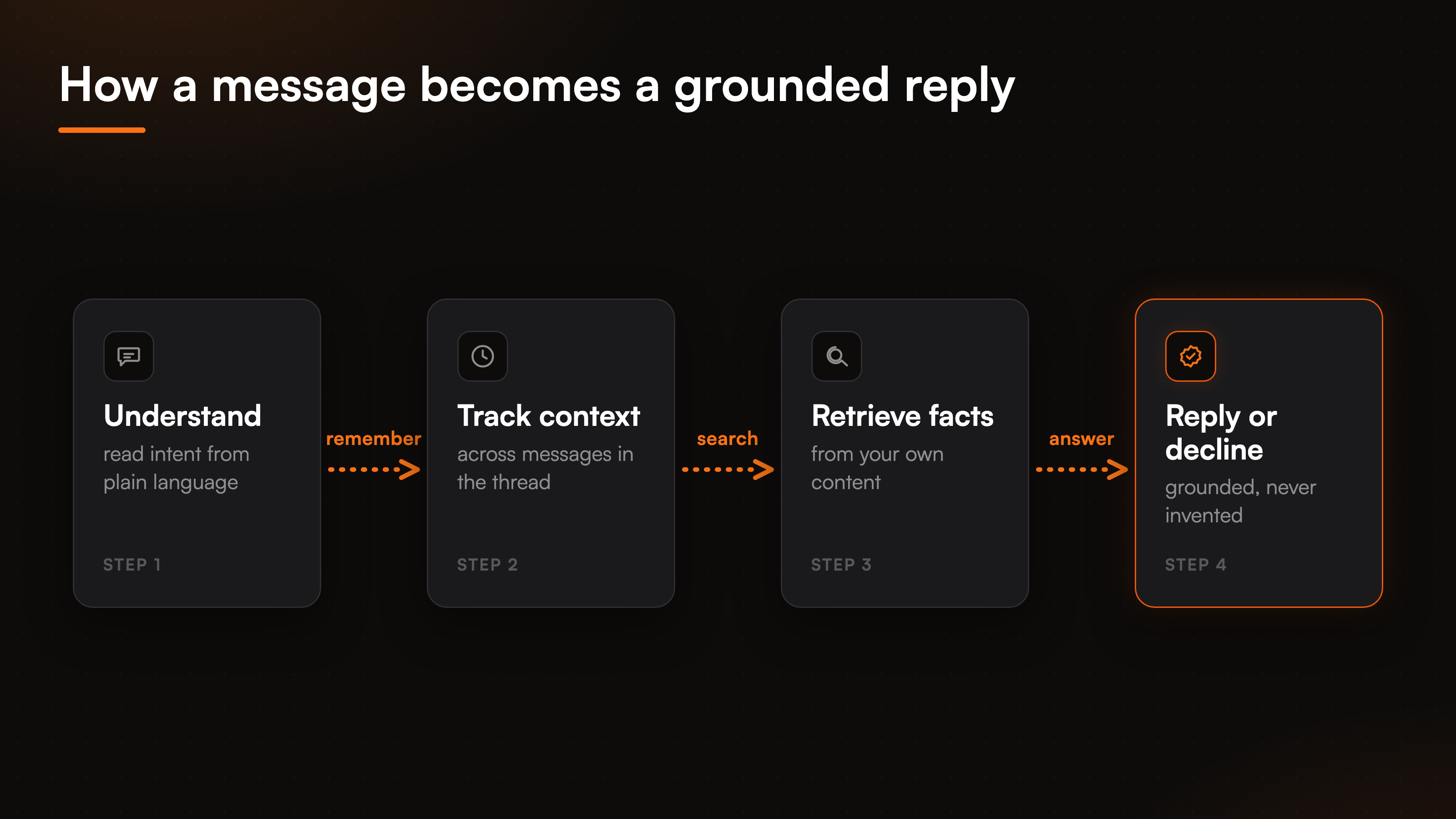
To understand how conversational AI works, it helps to follow a single message through the system. It arrives as plain text. The first job is natural language understanding: pulling the intent and the details out of the sentence, so "can I still send back the boots I got last week" becomes a return request tied to a specific order and a timeframe.
Next comes context. A good system does not treat each message as a fresh start. It carries the thread, so pronouns and shorthand keep their meaning and the customer is not made to repeat the order number three times.
Then the part we care about most: grounding. Instead of writing whatever sounds plausible, the system searches the business's own material, its uploaded docs, help articles, and crawled pages, and builds the reply from what it finds. If the answer is not in there, it declines rather than inventing one. We think that last step is where most of the value hides, because a confident wrong answer costs more than a polite "I don't have that." If you want the mechanics of that retrieval step, we break it down in RAG and grounding explained.
What separates it from a basic chatbot
The conversational AI vs chatbot question trips people up because the word "chatbot" covers two very different things. The old kind is a decision tree wearing a chat window. You click a button, it shows the next set of buttons, and the second you type something off-script it dead-ends with "I didn't understand that." It never understood anything. It matched.
A conversational system handles the same request without the rails. Rephrase the question, skip a step, change your mind halfway, and it follows along because it is reading meaning, not matching strings. The clearest tell is a multi-turn thread. Ask about an order, then ask a follow-up that only makes sense in light of the first message, and a scripted bot loses the plot while a conversational one keeps it. We go deeper on where a bot ends and an agent begins in our piece on chatbot vs AI agent.
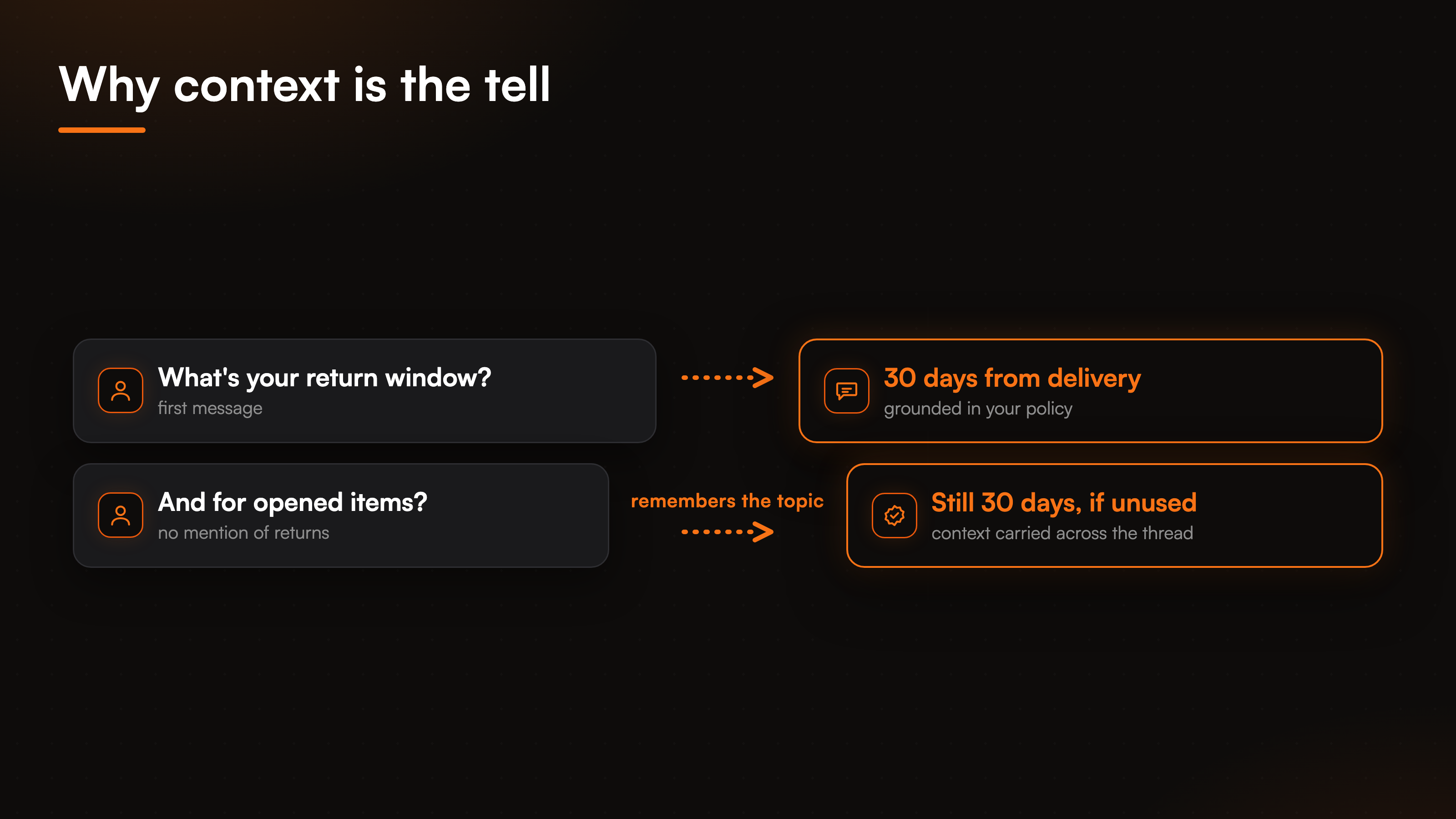
That gap is not cosmetic. A scripted bot pushes the work back onto the customer, who has to learn its menu and phrase things its way. A conversational agent meets people in their own words, which is the entire reason for talking to software instead of hunting through a page.
Answering versus acting: where the agentic tier begins
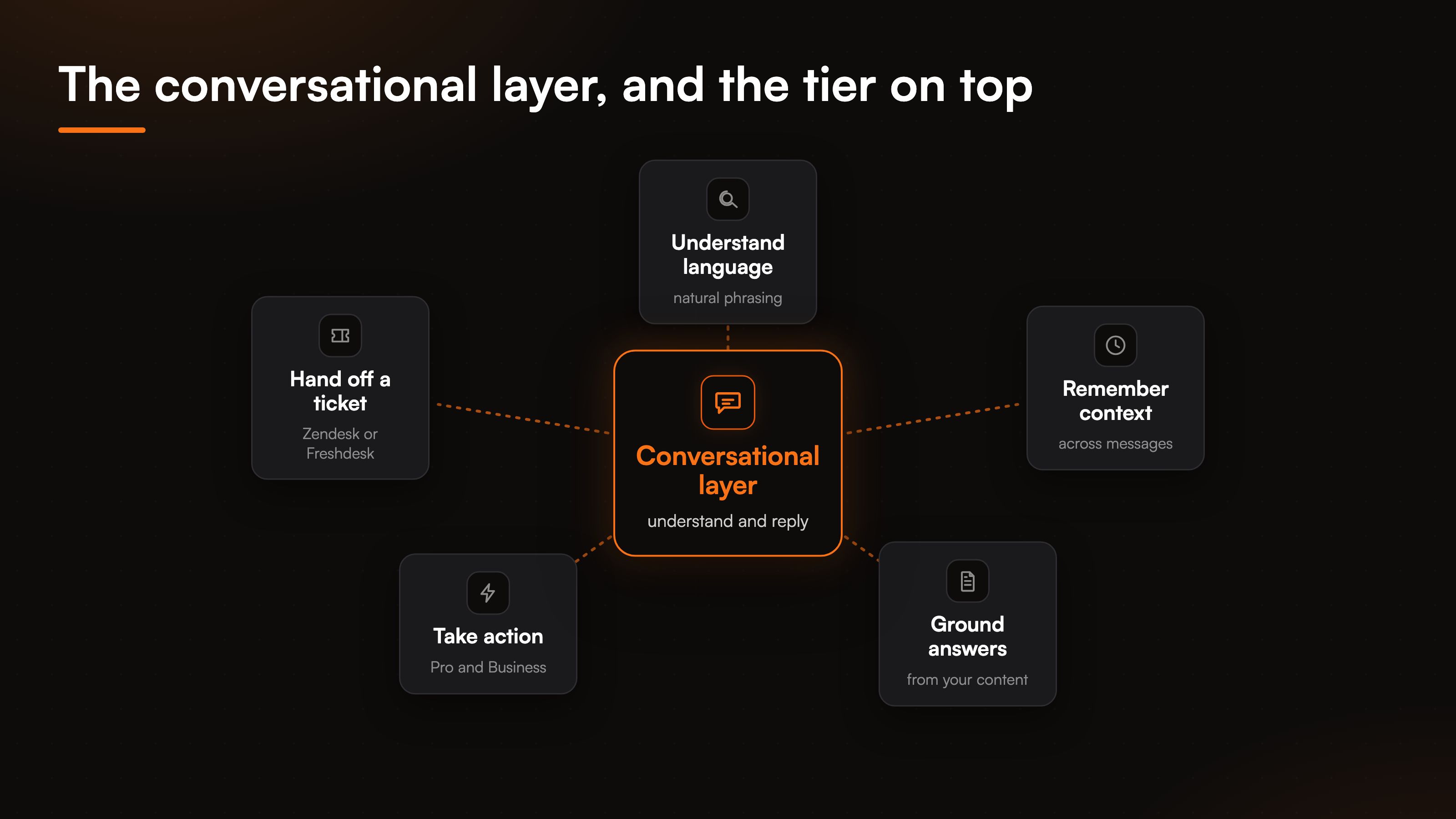
Here is a line worth drawing clearly, because the two ideas get blurred together. Conversational AI is the layer that understands and replies. Agentic AI is what you get when you give that layer the power to act on real systems, not just talk about them. One is about language, the other is about doing. A system can be fully conversational and never touch your store, and plenty of useful support works exactly that way.
When a shopper asks "where is my order," a conversational agent that only answers explains how to check the status. Add the action layer and it looks up the order against the store and tells them it is out for delivery today. Same understanding underneath, one more power on top. That action side is a genuinely separate capability, and we give it the full treatment in what agentic AI is.
In our product the split is also a pricing line. Grounded conversational answering is available from the free plan up. The action layer, the connectors that let the agent check orders, book slots, or start returns, runs on the Pro and Business tiers. So conversational is the foundation everyone gets, and acting is the tier you add when talking is not enough.
What conversational AI looks like in real support
Definitions are easier to trust when you can point at one. Conversational AI in customer support shows up as an assistant embedded on a website that reads plain language, answers from the business's own knowledge, and knows when to stop.
BestChatBot installs as a web widget on your site, nothing to download and no separate app. It answers from your content and declines when a question sits outside it, and it can cite the source it used so the customer can check. When a request needs a person, it does not fake a live rep. It files a ticket in Zendesk or Freshdesk and routes it to your team's inbox. On the paid tiers it also acts: 29 prebuilt actions across 8 connectors covering scheduling, support, CRM, payments, and e-commerce, with the connectors kept to one per category (one calendar, one help desk, one store) rather than a loose promise of a hundred apps.
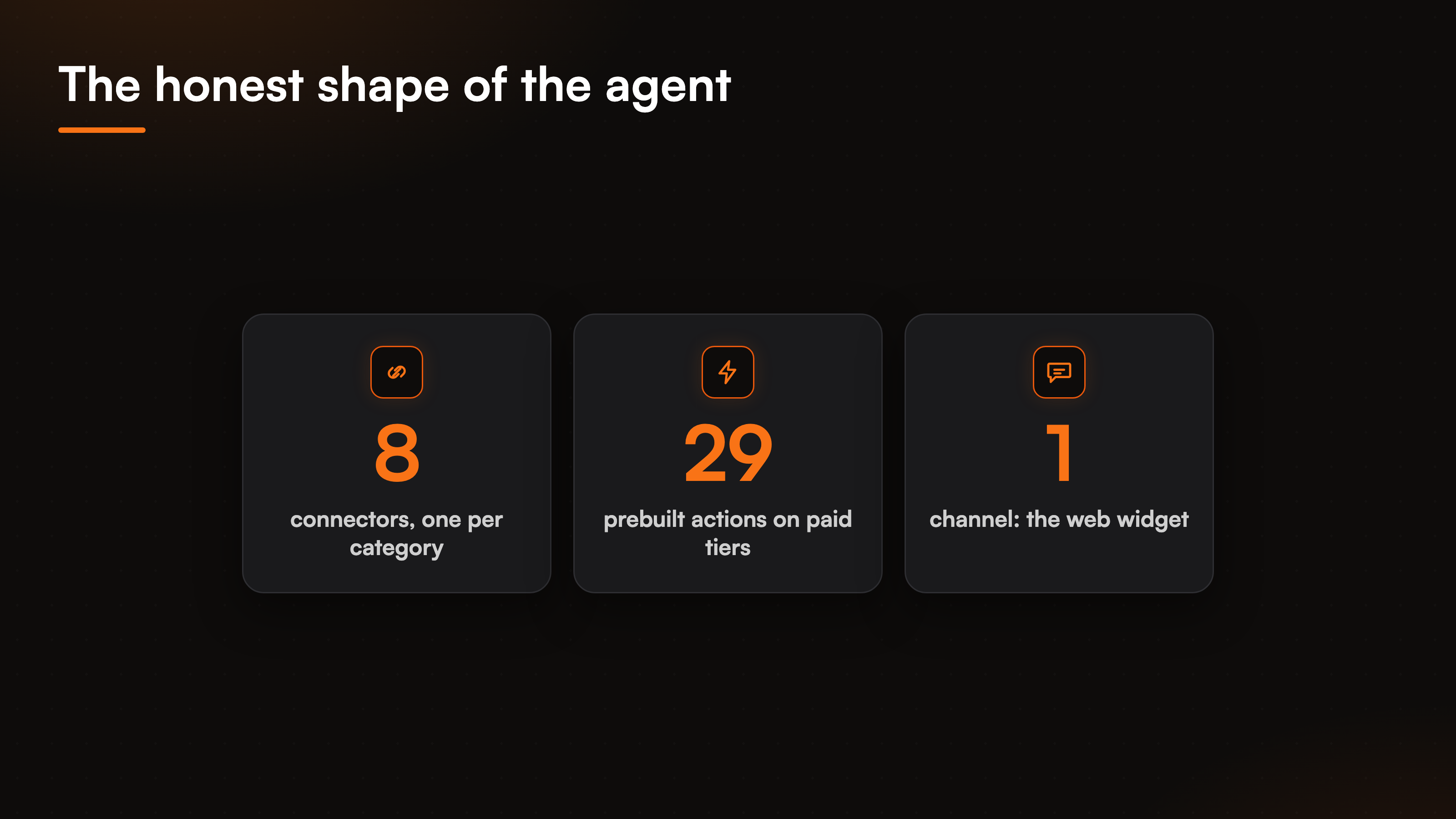
Two honest limits keep the picture straight. The agent does not teach itself. When a reply is wrong, a person reviews it in the dashboard and updates the knowledge, so it gets better by decision, not by magic. And any action tied to a customer's account waits on a verified identity: the visitor's email and name are pinned from a signed token, so the agent will not act on an account without proof of who is asking. The grounding discipline behind all of it is the same one we describe in our explainer on a no-hallucination support agent.
FAQ
What is conversational AI in simple terms?
Conversational AI is software you can talk to in plain language, that understands what you mean and replies in kind. It reads the intent behind messy phrasing, remembers earlier messages in the same chat, and answers the question you asked rather than making you pick from a menu.
Is conversational AI the same as a chatbot?
Not quite. Many chatbots are scripted decision trees: you click buttons and go off the rails the moment you type something unexpected. Conversational AI reads meaning instead of matching strings, so it handles rephrased questions and multi-turn threads that a scripted bot cannot follow.
Conversational AI vs agentic AI: what is the difference?
Conversational AI understands and replies. Agentic AI adds the ability to act on real systems, like checking an order or booking a slot, not just describing how. A system can be fully conversational without taking any action. In our product the answering layer is available from the free plan and the action layer runs on Pro and Business.
How does conversational AI avoid making things up?
By staying grounded. The reply is built from the business's own content, its docs, help articles, and crawled pages, and the system declines when a question falls outside that material instead of inventing a policy. It can cite the source it used, so the answer is checkable rather than a guess.
Where does conversational AI work best in customer support?
It shines on the repetitive, well-defined questions that fill a support queue: order status, return windows, policy details, product facts. It reads the customer's own words, answers from grounded knowledge, and files a ticket for the cases a person should handle, so the routine load lifts without anyone getting a wrong answer with confidence.
Conversational AI is not a magic upgrade. It is a shift in what you expect from the box on the page: not a menu to navigate, but a reply that read your question and stayed honest about what it knows. If you want to see which plan matches your volume and where the action tier fits, start with the AI support pricing guide, or browse the rest of our AI support agent resources.