
AI Support Agent for Subscription Businesses
An AI support agent for subscription businesses answers pause, renewal and failed-payment questions, then lets verified members manage the account.
A subscription business lives and dies by the second month. You already won the sale. Now every renewal, every declined card, every "can I skip next month" is a chance to keep the customer or lose them. That inbox looks nothing like a one-time store's. Nobody is asking how to use a product they bought once. They want to pause a box, move a delivery, swap a plan, or ask why their card got declined. We built the widget for exactly that kind of recurring, account-specific question. An AI support agent for subscription businesses answers from your real policy and, when the visitor is verified, acts on the account instead of filing another ticket.
The tickets that come with recurring revenue
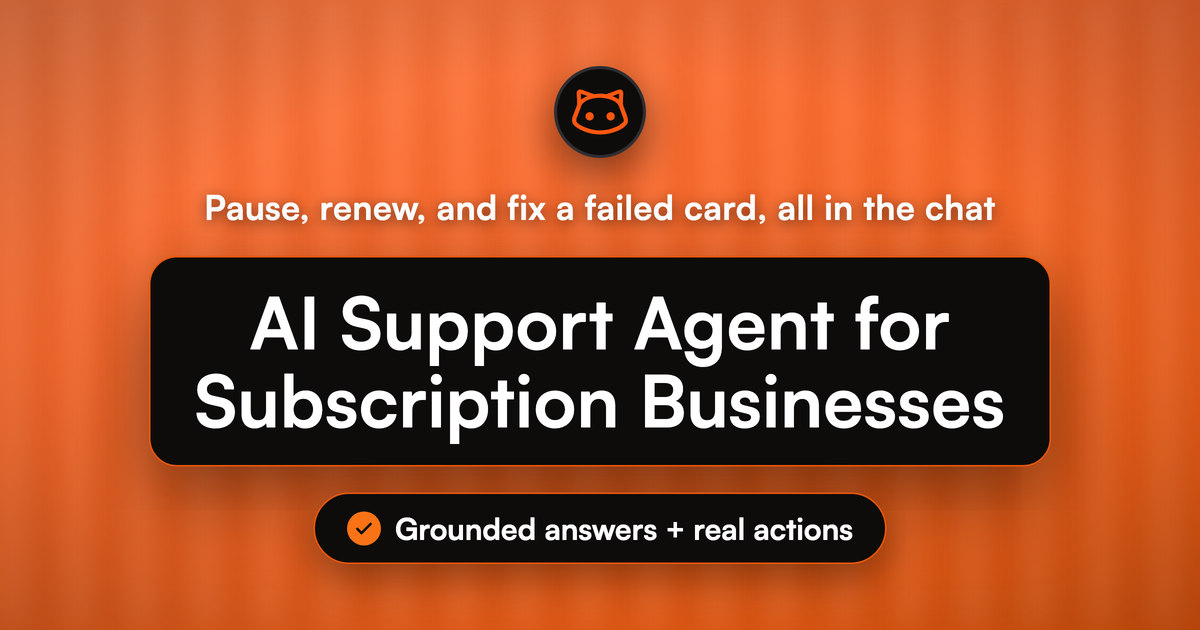
Recurring revenue brings a recurring inbox. The questions repeat every billing cycle, and most of them are account-specific rather than product questions.
Here is the shape of it. A member wants their pause and cancellation options before the next charge. Someone's card expired and they got a dunning email they do not understand. A subscriber wants to skip next month, change the delivery date, or move from monthly to annual. Another needs to update the shipping address before the box ships. A few just want the exact renewal date and amount.
Left to a static help page or a bot that only pastes links, these turn into tickets. Unanswered billing questions are a quiet driver of subscription churn: a member who cannot pause in ten seconds cancels instead. The volume is predictable, which is what makes it a good fit for an assistant that can both answer and act. It sits inside the wider family of AI support agents built by industry, and the recurring-revenue mechanics overlap with what SaaS teams run into as well.
Answer from your real policy, not a guess
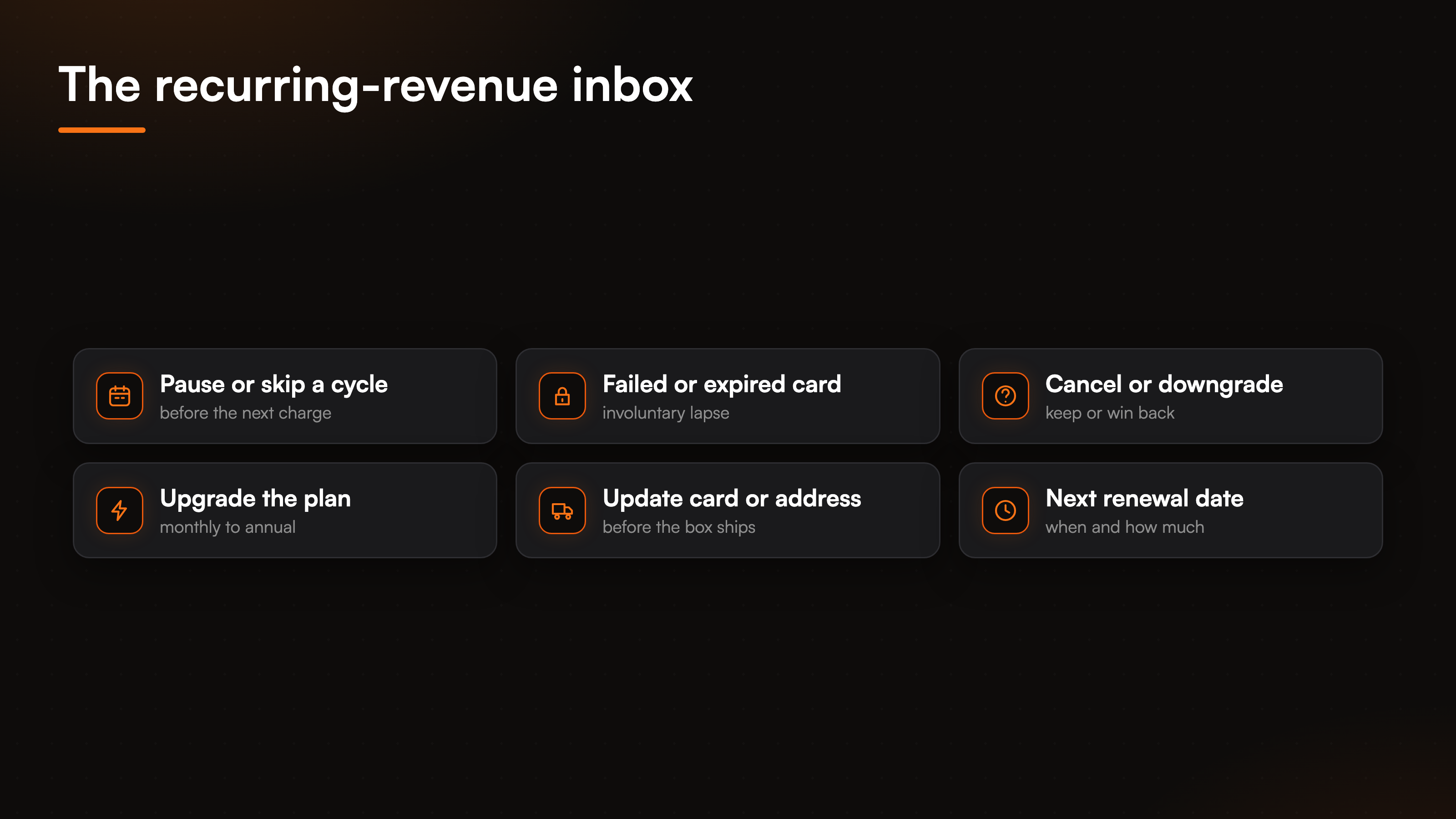
Every subscription has its own rules. Your pause window might be seven days before the renewal. Your cancellation policy might forbid refunds on a shipped box. Your annual plan might prorate differently from the monthly one. A generic chatbot invents a plausible-sounding version of that policy, and a wrong answer about a refund is worse than no answer.
Our position is simple: the agent should read your policy, not improvise one. The widget answers from the knowledge you upload, your terms, your shipping calendar, your pause and refund rules, and it declines when a question falls outside that content instead of guessing. When it does answer, it can cite the source so a member sees where the rule came from. It is worth reading how grounded answers decline instead of inventing if that trade-off matters to you.
Grounding is what makes the rest safe. An agent that already answers policy correctly is an agent you can trust to act on the account.
Let verified members manage the subscription themselves
Answers are half the job. When a subscriber types manage my subscription, they want something to happen, not a link to a portal they have to log into again.
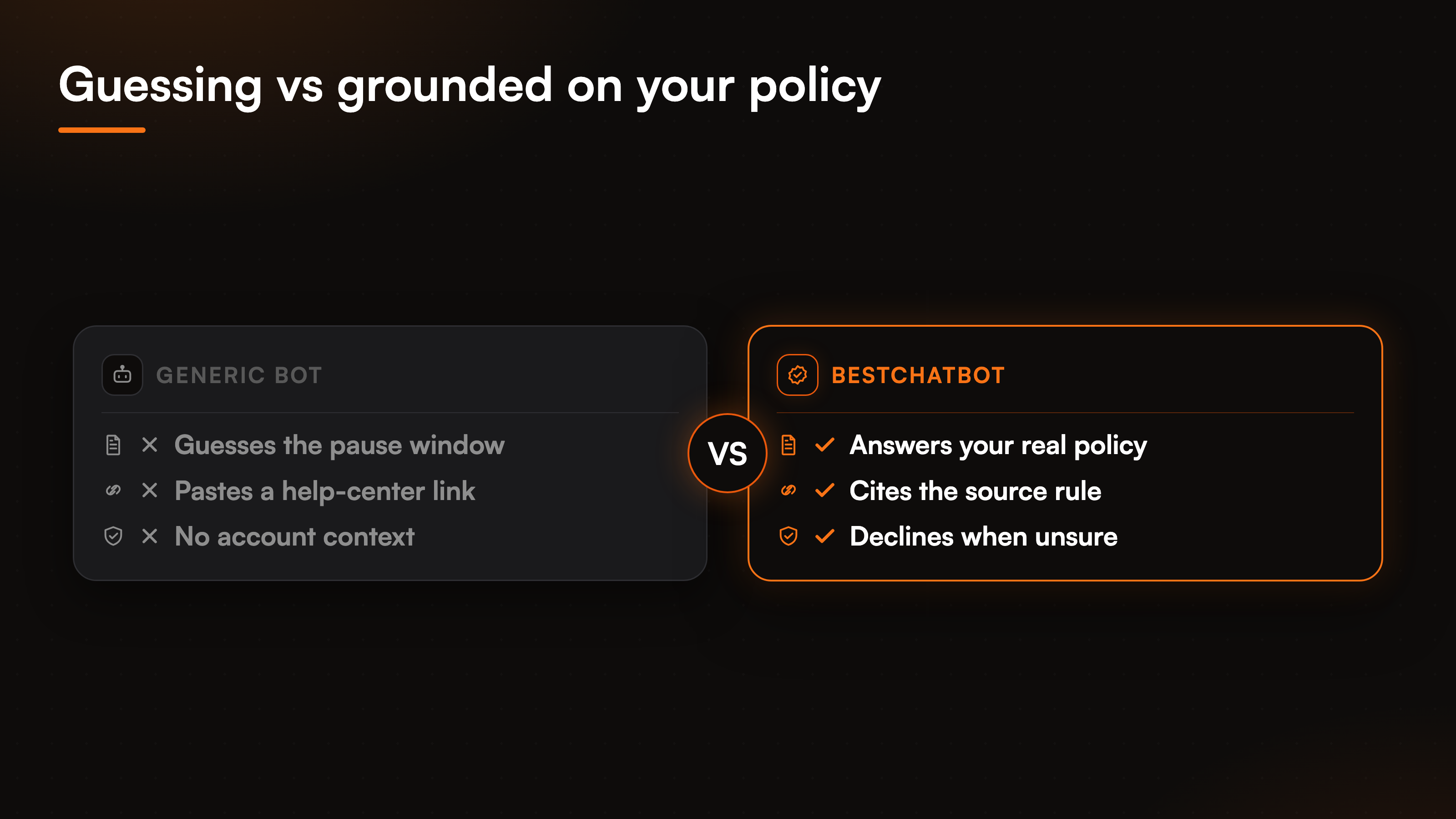
That is where the agentic tier comes in. On Pro and Business plans, the widget executes real actions through secure connections. For recurring billing, the Stripe connection lets the agent look up the customer's live subscription, tell them the exact next charge and date, and open an identity-verified action to update the card, change the plan, or cancel, handed off to Stripe's own hosted portal so card data never touches the chat. The agent reads the subscription; the sensitive change happens on Stripe's secure surface. This is the same billing and subscription self-service pattern that recurring-revenue accounts rely on.
None of this runs for an anonymous visitor. Account actions need a verified identity: the widget pins the customer's email and name from a signed token your site issues, so the agent can only ever act on the person actually logged in. No token, no account action, and it stays on general policy answers. The same rule covers the whole library, 8 connectors and 29 actions in total, from Stripe billing to a support ticket in Zendesk or Freshdesk when something genuinely needs a human.
Catch a failed payment before it becomes churn
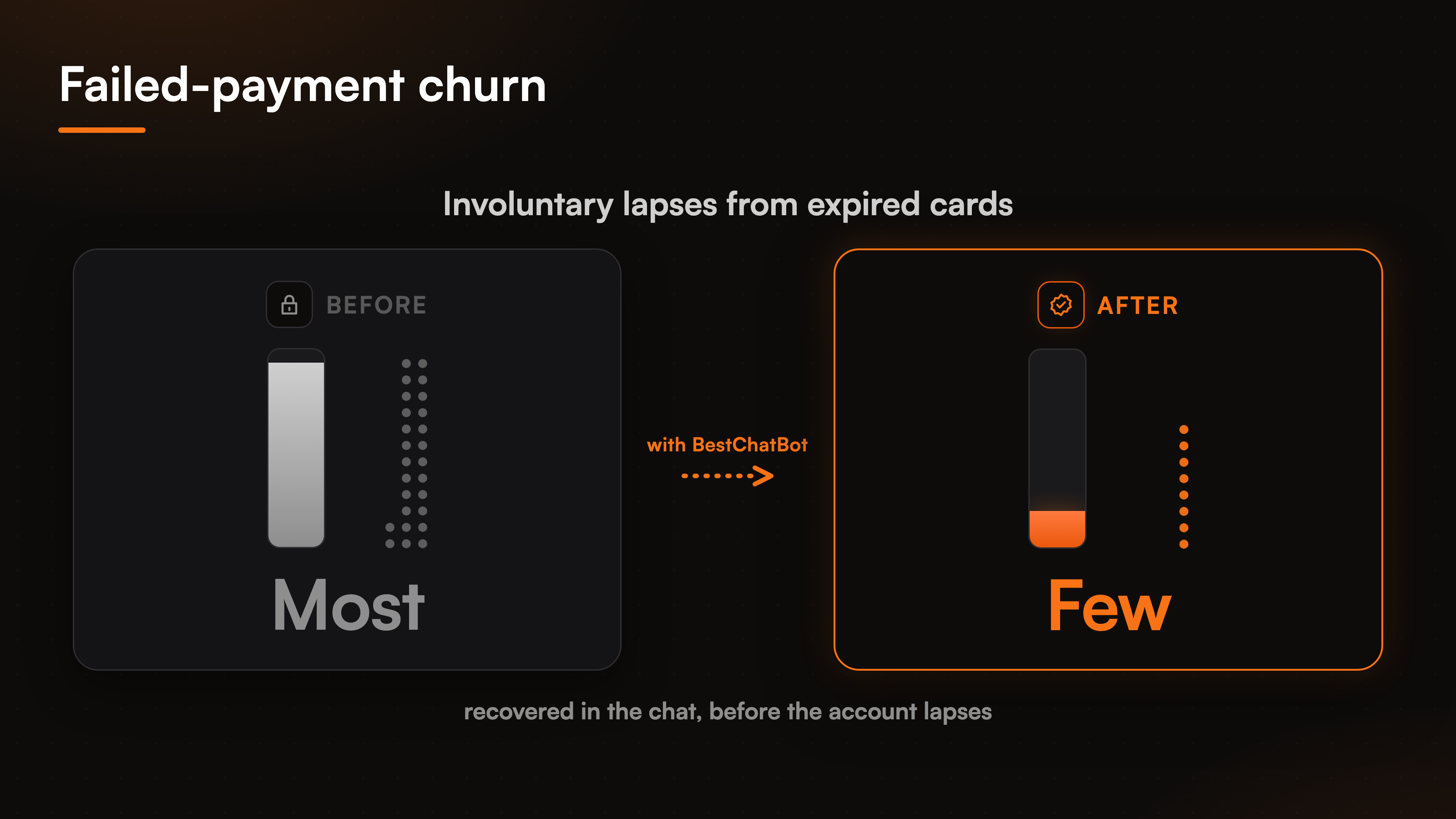
Most cancellations are not angry decisions. A card expires, the renewal silently fails, the dunning retries run out, and a paying member lapses without ever meaning to. That involuntary loss is one of the largest and most fixable sources of subscription churn.
The widget sits right in that gap. When a member arrives confused about a declined charge, or clicks through from a failed payment email, the agent explains what happened in plain language and, for a verified customer, opens the update-card action on the spot. No support queue, no waiting for business hours. The member fixes the card in the same conversation that surfaced the problem.
I think this is where a support agent earns its keep on a subscription site. Deflecting a how-to question saves a few minutes. Recovering a failed payment before the account lapses saves the whole customer. Pair that with the same widget handling pause and cancellation requests, and a lot of would-be churn becomes a two-line chat instead.
One web surface, on purpose
The agent lives in one place: the chat widget on your website. There is no phone line, no separate app, no scattered inboxes to keep in sync. For membership support that already runs through your site, one well-kept surface beats five half-maintained ones.
A few honest limits keep it trustworthy. Connectors pair one to a category, one store platform, one support tool, one payment provider, so there is never doubt about where an action lands. The agent does not invent connectors it does not have, and it does not learn on its own: your team reviews answers in the dashboard and updates the knowledge when a policy changes. Action execution sits on the Pro and Business tiers, which you can size against volume on the pricing tiers.
FAQ
Can the agent cancel or pause a subscription for a customer?
For a verified customer on a Pro or Business plan, yes. The widget looks up the live subscription through the Stripe connection and opens an identity-verified action to pause, change, or cancel, with the sensitive step handed off to Stripe's hosted portal. An anonymous visitor only gets general policy answers, never account changes.
How does it avoid giving wrong answers about refunds or pause windows?
It answers from the policy you upload rather than generating one. When a question falls outside your knowledge, it declines instead of guessing, and it can cite the source rule so the member sees where the answer came from.
Does this work for subscription boxes as well as digital memberships?
Yes. Physical box questions like skip next month, change the delivery date, or update the shipping address are handled the same way, and order-level actions run through your Shopify or WooCommerce connection.