
Startup Support Playbooks for AI
The core support playbooks every startup should define before automating: triage, escalation, knowledge updates, and tone. How playbooks shape what the bot does.
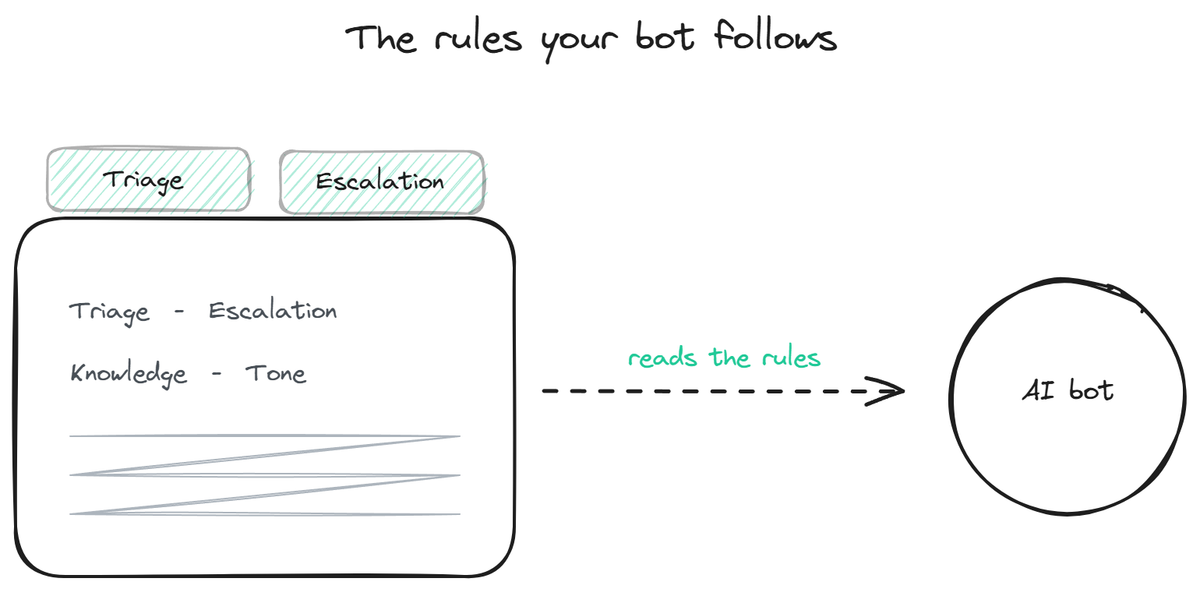
A support playbook is the written answer to "how do we handle this?", and for a startup automating support, the playbooks you define are what turn a generic bot into one that behaves like your team. Most startups run support on instinct: the founder knows how to handle a refund request, which questions need a human, what tone to use, but none of it is written down. That works until you automate, at which point the bot needs explicit rules where the humans had intuition. This page covers the core playbooks a startup should define before launching an AI agent, how each one maps to bot behavior, and why writing them down helps the humans too.
Why playbooks come before automation
Automation forces a useful discipline: a bot cannot run on intuition. A human support agent absorbs how your company handles things by osmosis (watching the founder, reading past tickets, asking). A bot has none of that context, so whatever is not written into its configuration does not happen. This is uncomfortable at first and valuable in the end, because it surfaces all the undocumented decisions your support has been making implicitly.
The startups that automate well treat the playbook-writing as the real work and the bot setup as the easy part. They sit down and answer the questions they have been answering on instinct: which questions can be answered automatically, which need a human, what happens when the bot does not know, how the bot should sound, when to update the knowledge base. Each answer becomes a rule the bot follows consistently, every time, which is more than can be said for a tired human at the end of a long day.
The payoff is consistency. A startup with written playbooks gives every customer the same handling regardless of who (or what) is answering, and the founder's knowledge stops being a single point of failure locked in one head. The train the chatbot page covers turning the knowledge side of these playbooks into bot configuration.
The core playbooks every startup needs
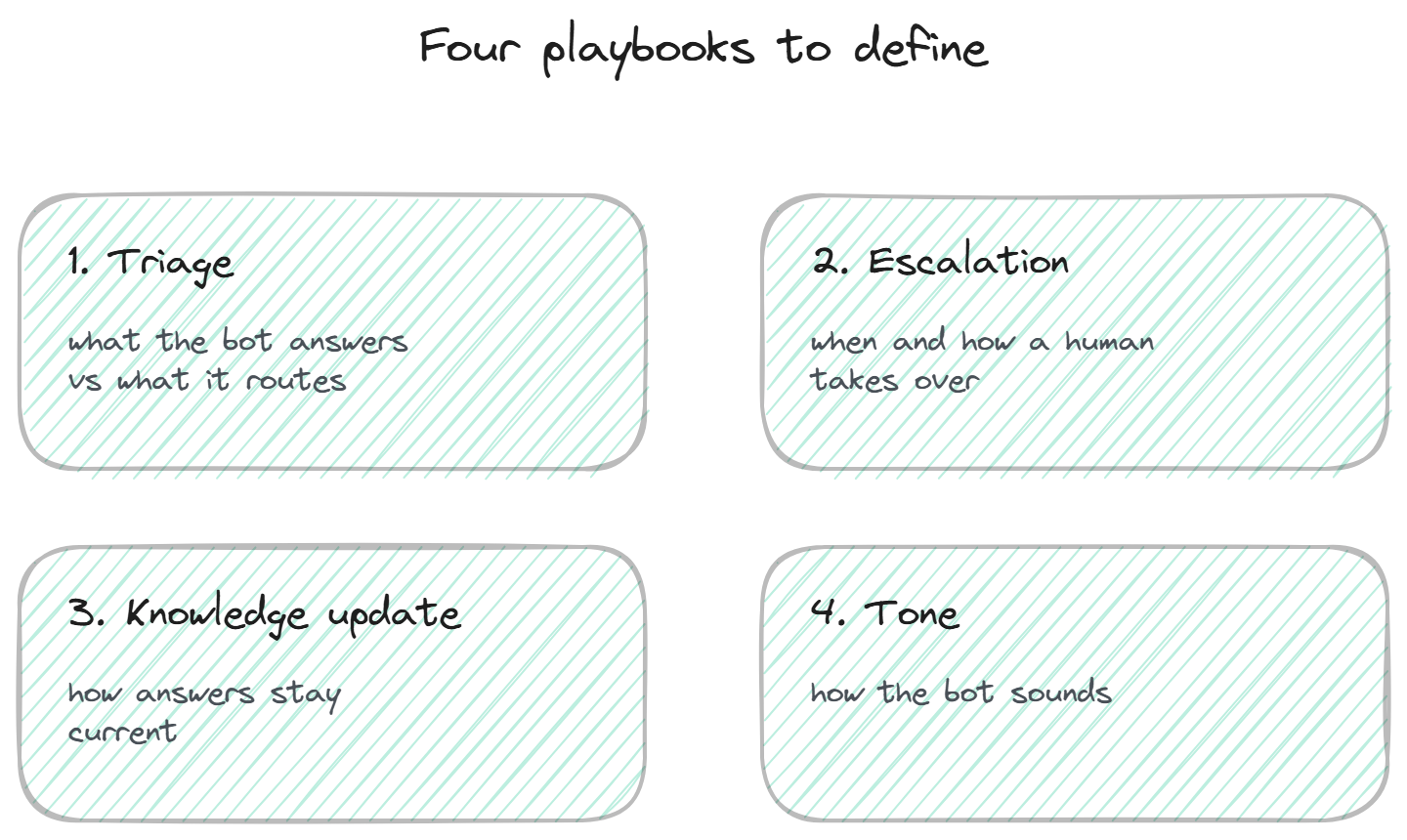
Four playbooks cover most of what a startup needs to define before launch.
- The triage playbook decides what the bot answers versus what it routes. It maps your question categories to one of three buckets: answer automatically (the repetitive factual questions), gather and route (cases where the bot collects details but a human resolves), and route immediately (sensitive cases the bot should not touch). This is the playbook that most directly shapes the customer experience, because it determines what gets an instant answer and what waits for a person.
- The escalation playbook defines when and how a human takes over. For a startup that cannot staff live transfers, escalation usually means the bot creates a support ticket or routes to a shared inbox with the conversation context attached, rather than a synchronous handoff. The playbook specifies the triggers (bot cannot answer, customer asks for a human, sensitive topic, repeated failure) and what the human receives. The escalation paths page covers the handoff models in detail and why the async ticket route fits a lean team.
- The knowledge-update playbook defines how answers stay current. A startup changes fast, and a bot grounded on stale content gives confidently wrong answers. The playbook specifies who reviews the gap log, how often, and how new answers get into the knowledge base. With a supervised autolearning loop the bot proposes the updates from real unanswered questions and a human approves them, which is the lightest version of this playbook a busy team can run.
- The tone playbook defines how the bot sounds. Your support has a voice (formal, casual, warm, terse), and the bot should match it so the automated answers feel like part of your brand rather than a generic assistant. This is a configuration setting in most tools, but writing down the intent first keeps it consistent.
How playbooks map to bot behavior
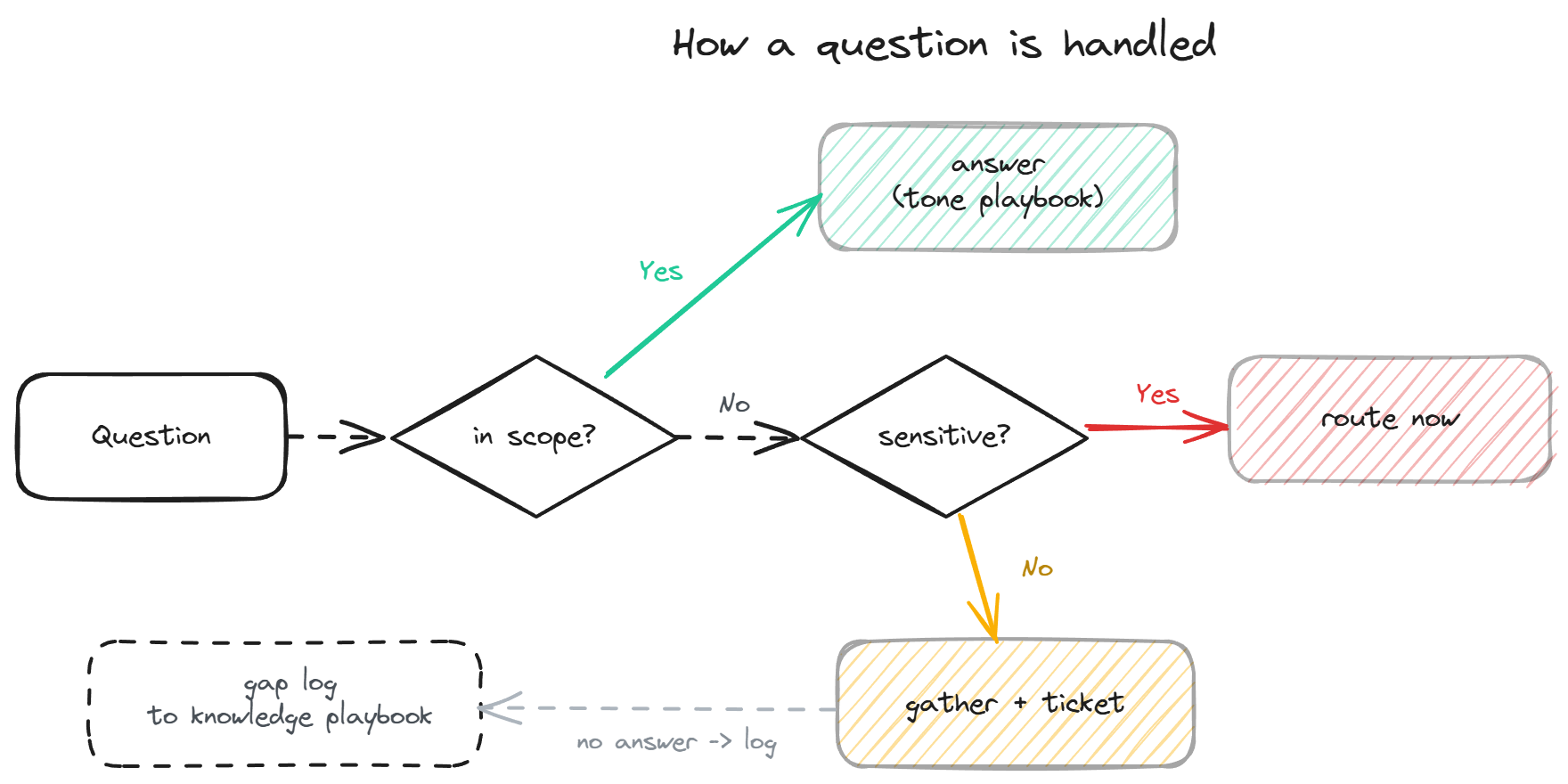
Each playbook becomes a concrete part of the bot's behavior. The triage playbook becomes the bot's scope and routing rules: what it attempts, what it gathers and routes, what it refuses. The escalation playbook becomes the handoff configuration: the triggers and what context travels with the routed conversation. The knowledge-update playbook becomes the review cadence and the autolearning approval flow. The tone playbook becomes the bot's configured voice.
The value of writing them as playbooks rather than just configuring the bot directly is that the playbook is the source of truth a person can read, audit, and revise, while the configuration is just the current implementation of it. When a startup grows and adds a support hire, the playbooks onboard that person too, because the rules the bot follows are the rules the human should follow. The playbooks become shared SOPs for the whole support operation, human and automated alike.
This also makes the bot auditable. When a customer gets a handling they did not expect, you can trace it to the playbook that produced it and decide whether the playbook is wrong or the configuration drifted from it. Support that runs on documented playbooks is support you can reason about and improve, rather than a black box.
BestChatBot turns these playbooks into behavior: scope and routing rules for triage, configurable ticket creation to Zendesk or Freshdesk for escalation, a supervised autolearning loop with human approval for knowledge updates, and a configurable brand tone, all running from the same widget. For pricing details, see plans.
FAQ
- Do I really need written playbooks, or can I just configure the bot? You can configure directly, but writing the playbooks first surfaces the undocumented decisions your support has been making on instinct, and gives you a source of truth you can audit and hand to future hires. The configuration is the implementation; the playbook is the reasoning behind it.
- How detailed should a startup's playbooks be? Start light. A page per playbook covering the common cases is enough to launch. Detail accumulates as you discover edge cases in the gap log. A startup that waits for exhaustive playbooks never launches; one that starts with the basics and refines does fine.
- Who should own the playbooks? Whoever owns support, which in an early startup is often the founder. The point is that the rules live somewhere a person can read and revise, not only in the bot's configuration or one person's head.
- How do playbooks handle the cases the bot should not touch? That is what the triage and escalation playbooks are for. The triage playbook marks sensitive categories as route-immediately, and the escalation playbook defines how they reach a human with context. The bot follows the rule rather than improvising on a case it should not handle.
- Do playbooks slow down launch? A little, and it is worth it. The playbook work is the difference between a bot that behaves like your team and one that surprises your customers. A short playbook pass before launch prevents the problems that a rushed, rule-less launch creates. For pricing details, see plans.
For pricing details, see plans.
Explore our AI support for startups.