
Tidio vs BestChatBot for AI Support
Tidio vs BestChatBot: Tidio brings live chat and multichannel, BestChatBot brings grounded answers and agentic actions as a web widget you install today.
You landed here because you are weighing Tidio against BestChatBot, and both call themselves AI support. They aim at different jobs. Tidio grew up as a live chat and multichannel tool with a chatbot builder and its Lyro AI sitting on top. BestChatBot is an AI support agent that answers from your own content and runs real actions on your systems, installed as one web widget. This is a straight head to head, honest about what each side does well. If you would rather scan the whole field first, our Tidio alternative rundown lists more options if a broader live chat alternative is what you are after, and the wider set of AI support agent comparisons covers the rest.
Two bets on the words "AI support"
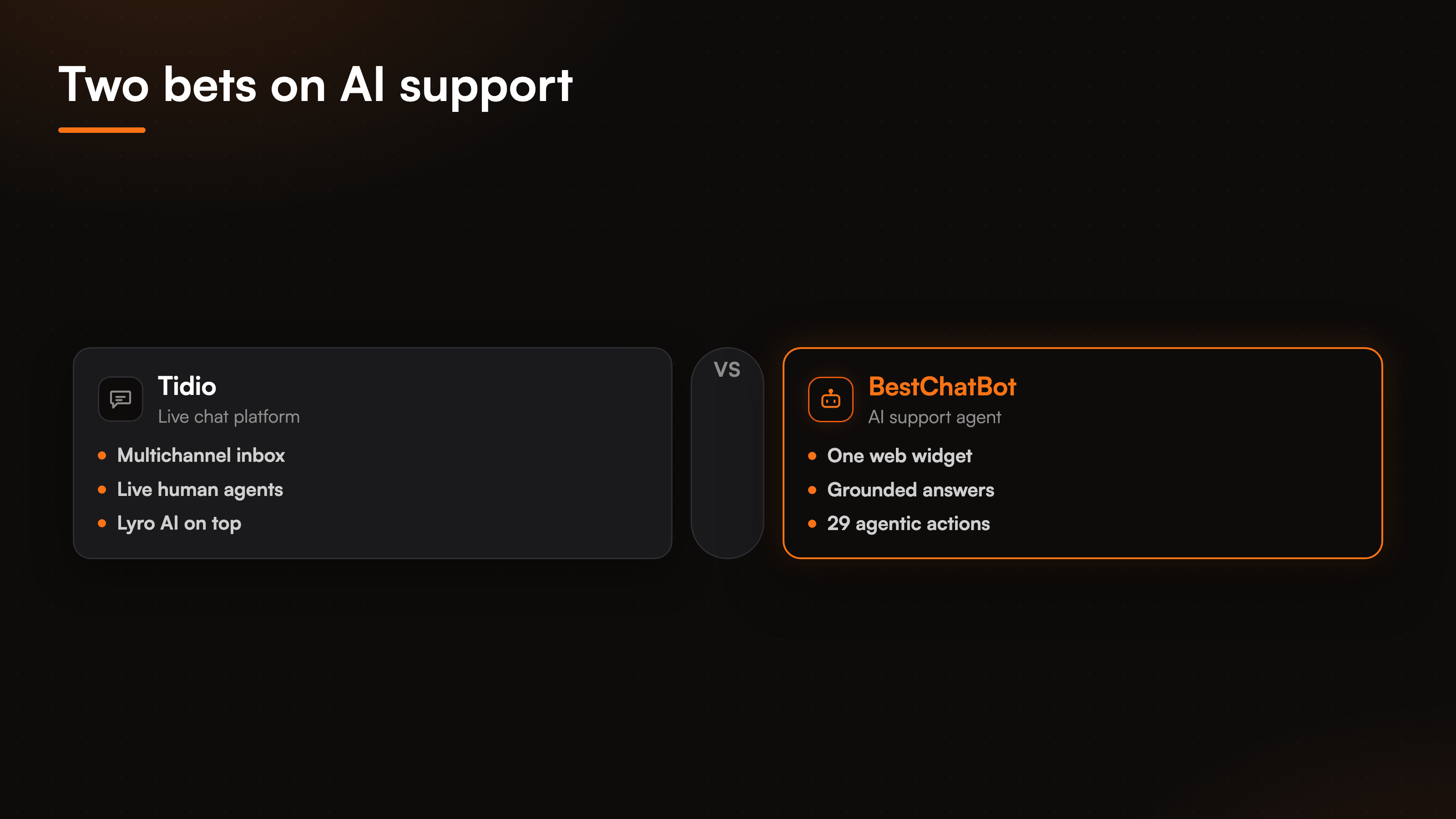
Both products answer chats, so the label fits either one. Underneath, they make different bets.
Tidio bets on presence across channels. It puts live chat on your site, ties in email, Messenger, Instagram, and WhatsApp, and lets a human step in when the bot stalls. Its Lyro AI handles common questions on top of that. If your team wants people and bots sharing one inbox across many channels, that is the shape Tidio was built for, and it does it well.
We made a narrower bet. BestChatBot does one surface, the website widget, and pours everything into two things: answers grounded in your own knowledge, and actions that run on connected systems. No WhatsApp, no shared human inbox. One channel, done carefully, with an agent that can check an order or book a call instead of only talking about it.
Tidio vs BestChatBot, feature by feature
Here is the same decision as a grid. The rows are the things that change how the agent actually behaves, not a marketing checklist.
| Tidio | BestChatBot | |
|---|---|---|
| Core surface | Live chat plus multichannel (email, Messenger, Instagram, WhatsApp) | One web widget, on your site |
| Human chat | Live agents in a shared inbox | No live handoff, escalates as a ticket |
| Answer style | Lyro AI answers from your content | Answers from your docs, declines when out of scope |
| Agentic actions | Limited, mostly guided flows | 8 connectors, 29 actions that run |
| Connectors | Many apps and channels | 8, one per category, no sprawl |
| Identity before actions | Not the model | Verified visitor identity (JWT) before any customer action |
| Escalation | Hand to a live agent | Creates a ticket in Zendesk or Freshdesk |
| Pricing shape | Seats plus per AI conversation | Plan tiers, actions on Pro and Business |
Read it by your own priorities, not ours. If a support-suite incumbent is also on your shortlist, the Intercom vs BestChatBot breakdown runs the same head to head against a different rival.
Actions that actually run on your systems
Answering is where most bots stop. The reason a team reaches for an agent at all is the next step: doing the thing the customer asked for. This is where BestChatBot spends its budget.
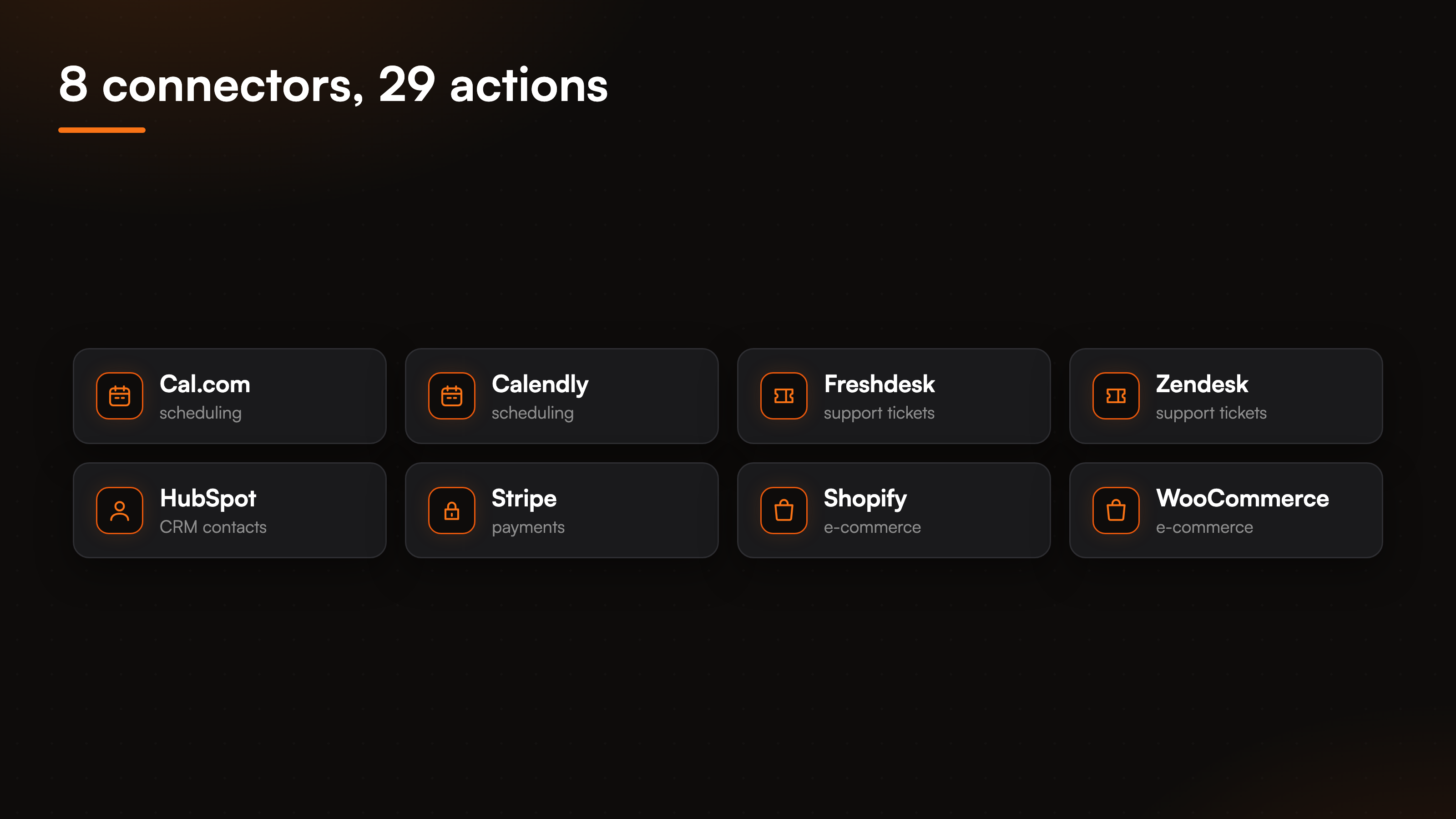
The agent ships 8 connectors that cover 29 actions across scheduling, support, CRM, payments, and e-commerce. One calendar tool, one support tool, one store platform per category, so the setup stays legible instead of turning into a hundred half-wired links. In practice the agent can check an order and its shipping, book or cancel an appointment, open a support ticket, or update a CRM contact.
Two facts keep this honest. Action execution sits on the Pro and Business plans, so it is a paid capability, not a free add-on. And BestChatBot never holds your customers' credentials directly; a specialized provider stores them encrypted and refreshes the tokens. Customer-specific actions only run once the visitor is verified, which we cover next. Our agentic actions overview goes deeper on the mechanics.
A decline beats a confident guess
An AI that sounds sure and quotes the wrong price costs more than one that admits a gap. We think grounded answers beat clever prompting, so a support agent should decline before it invents, and that belief is wired into how BestChatBot answers.
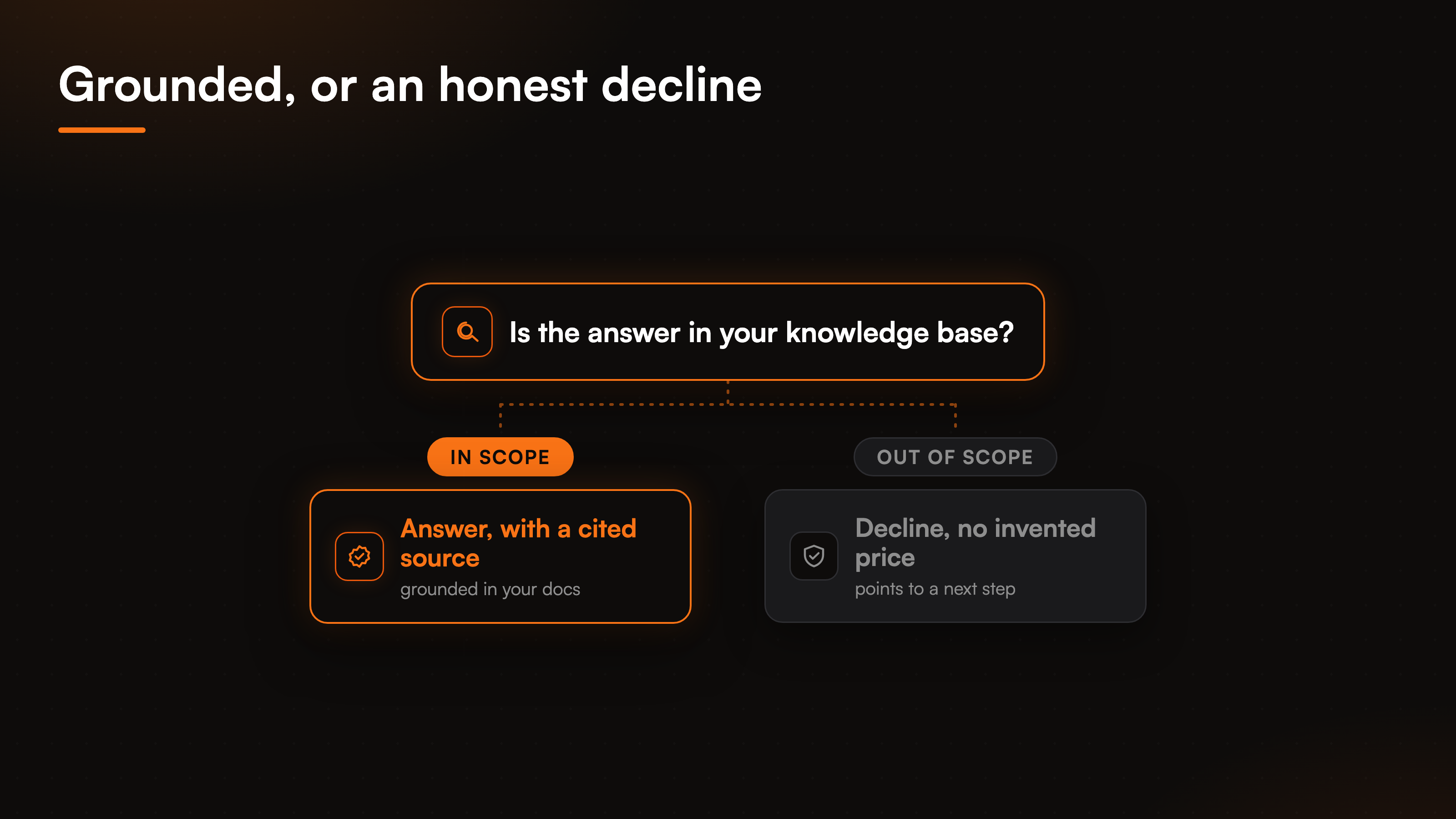
Every reply is built from your own uploaded documents and crawled pages. When a question sits inside that knowledge, the agent answers and can cite the source, so a reader checks the claim instead of trusting it blind. When the question falls outside, the agent says it does not know and points the person to a next step. It will not guess a refund window or a shipping date it cannot ground. That guardrail is the line between a demo that impresses and an agent you put in front of real customers. We wrote up the mechanism in our note on the no-hallucination approach.
Identity before any customer action
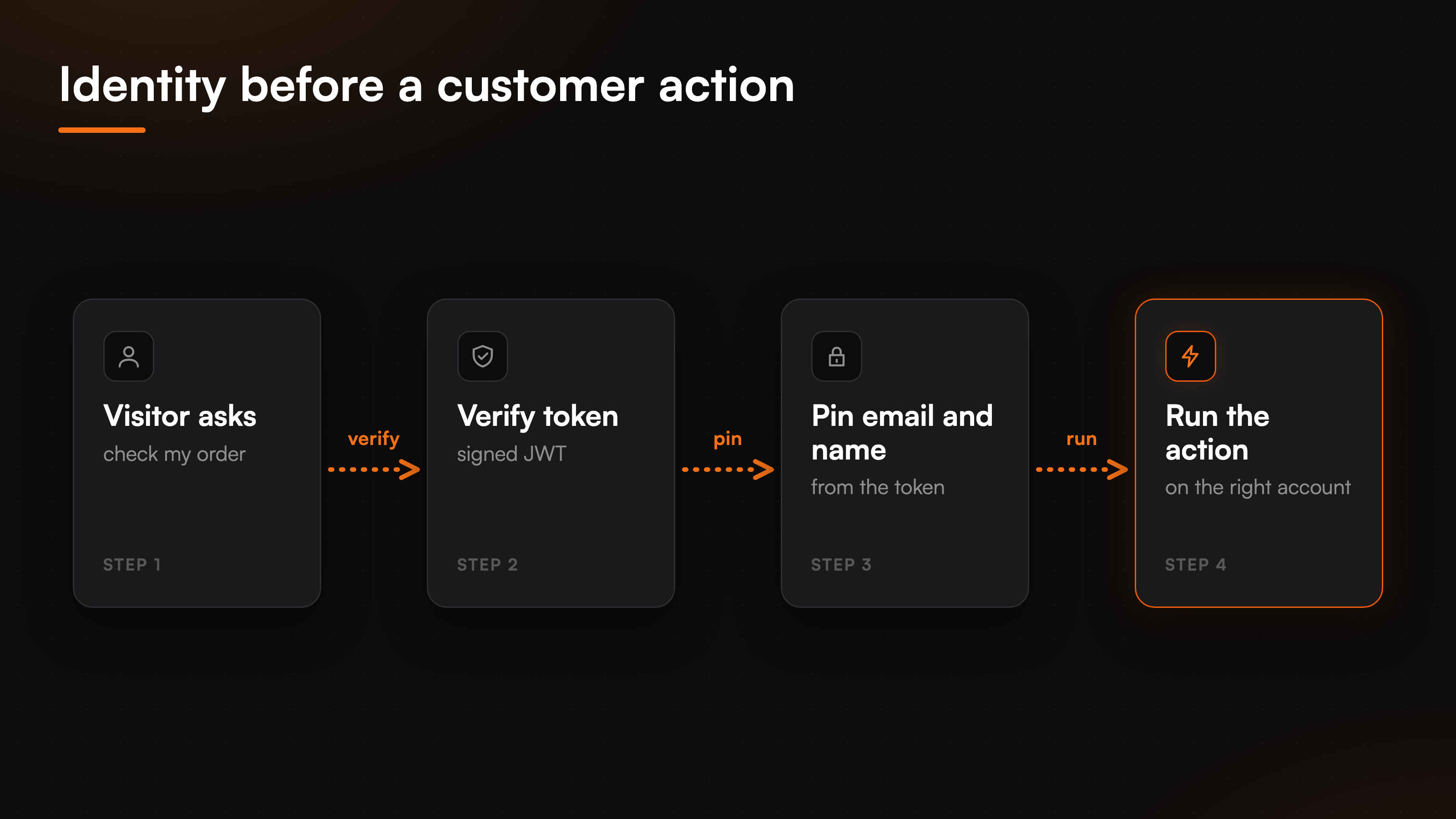
Running actions on real accounts raises an obvious question: how does the agent know it is helping the right person? Tidio's live chat leans on a human to judge that. BestChatBot leans on identity instead.
Before any customer-specific action, the widget verifies the visitor with a signed token (a JWT) that your own site issues. The agent pins the email and name from that token, not from whatever the visitor typed into the chat, so it cannot be talked into acting on someone else's order. No verified identity means the sensitive action is blocked, not quietly guessed. That is a small detail until the day a stranger asks the bot to cancel an order that is not theirs, and it holds the line.
Where Tidio is the better call
Here is the honest cut. If your support lives on WhatsApp, Instagram, and Messenger as much as your website, and you want human agents trading messages with customers in one inbox, Tidio does that today and BestChatBot does not. Live human chat across many channels is Tidio's home ground.
If your support lives on your website, and you want an agent that stays accurate, cites its sources, and books the call or checks the order rather than only chatting about it, that is where BestChatBot fits. Pick by where your customers already are, not by the longer feature list.
FAQ
Is BestChatBot a drop-in replacement for Tidio?
Not exactly, and this is where the two split. Tidio gives you live human chat across several channels, and BestChatBot does not. What BestChatBot gives back is an AI support agent that grounds every answer in your content and runs real actions, on one web surface. For teams whose support lives on their website, that trade is the whole point.
Does BestChatBot offer live chat with a human?
No. When a question needs a person, the agent creates a ticket in Zendesk or Freshdesk and routes it to your team's inbox. Nothing gets dropped, but a human answers by ticket, not by live chat.
How many tools can BestChatBot connect to?
Eight connectors covering 29 actions, one per category for calendar, support, CRM, payments, and e-commerce. The cap is deliberate. It keeps the setup predictable instead of promising to plug into anything.
What keeps the agent from inventing an answer?
It answers only from your own knowledge base and declines when a question falls out of scope. It can cite its sources too, so a reader can verify a claim rather than take it on faith.
Pricing usually settles a decision like this. See what each tier includes, and where agentic actions start, on our AI support pricing guide before you commit.